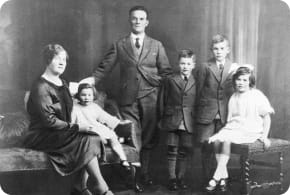
Ross Solon McGee

1882 - 1978

BillionGraves GPS Headstones record documenting the life and legacy of Ross Solon McGee who lived 24 Sep 1882 - 6 Sep 1978, during the Victorian era. Buried at Saint George City Cemetery in St George, Utah, United States. Includes photographs, vital records, and family information for genealogical research.

Grave marker at Saint George City Cemetery in St George, Washington, Utah, United States for Ross Solon McGee, 24 Sep 1882 - 6 Sep 1978

Record Info

Given Name: Ross Solon
Last Name: McGee
Born: 24 Sep 1882
4 birth records
Died: 6 Sep 1978
Age: 95 Years 11 Months 13 Days

Finding more about Ross

Every image taken by the BillionGraves app includes high precision GPS coordinates. Tap below to see the GPS location of this grave.

Other Info

View on FamilySearch

Epitaph

FATHER

Description

Father

Contributors

Memories

Personal Comments of Ross McGee

04/16/2018
[Abt 1893 near Ruby Oklahoma] While in, or near, Adair [Oklahoma], we [his fathers family when he was under 10 years old] rented a farm and had raised corn and wheat and a few hogs and the like. I say we. Some of we boys were pretty young at the time. But after all, there isn't one of us lads can remember when we were too young to help with the work that had to be done on the farm and around the house. With six rough and roudy boys there was plenty to do. And we had a most wonderful and patient mother to guide us in our work and in our lives. ... Our father and the older boys wanted to get land of our own, so in the early Spring of 1893, I think March or April, we moved about 30 miles east, near Vinita, Indian Territory, and located on 160 acres of new land under the Cherokee rights. At that time very sparingly settled, the nearest town of any Vinita, which was 18 miles away. Our post office, 3 miles, Ruby, Indian Territory. Our neighbors were scattered and far between. Our nearest neighbors lived about three-fourths of a mile away. A Mr. Webb and family. So our environment was mostly around the home and home was in the making. At times it wasn't so easy sledding. The house put up, the fencing of 160 acres and fixing for spring plowing and planting our crops. All in a pioneer way. The older boys did most of the work with the sod plow, and old "Tobe and Mal", (a mule team). We had a few other small horses, but old "Tobe and Mal" were the old stand-by. With warm spring weather coming and the blooming of beautiful wild flowers that were plentiful in that wide open prairie country, it made things look very pleasant. With all the work and chores there were to do, we, as boys, had plenty of time for fun and play. By this time we had pretty well surveyed all the country aroundabout. We picked out the best "Swimming holes", as we would call them, for part of our summer's recreation. Ice skating in the wintertime, etc. And as time went on, some of the boys rated pretty good in swimming and springboard diving. I mean as we became older. Now back to some more work. With a pretty good crop of corn, it had to be shucked and put in the crib which we had built during the summer. We rasied sweet potatoes, pumpkins, and all kinds of melons, vegetables and so on. With the fall work done, including the cutting of the wild grass for hay, and with the corn put away, and a few pigs fattening for our meat, we were all ready for a hard, cold winter. We also raised sorghum cane and made molasses, as this insured us pretty well for feed for our stock and something in the way of food for ourselves. Now there were other things for us to do, such as our winter fuel. We had learned how to find coal, by the formation of the rocks on the creek banks, where we would dig down from 4 to 6 feet and find coal with a depth of 12 to 14 inches. As time went on and we became older, some of the boys got pretty good at digging coal. When we would sell it we would get $1.00 per ton on the ground. So you, the reader, can imagine how much money we would make. But what we did get, we got the hard way.

A sketch of my father's family Part I

04/16/2018
A SKETCH OF MY FATHER'S FAMILY by Ross McGee [written about 1952] Father: Solon H. McGee, born Nov. 26, 1853, Lowerville, Tenn. Mother: Emily L. Robinson, born Aug. 14, 1855, Columbus, Miss. Married May 4, 1876, in Noble, Ozark County, Missoui. From here we will skip over to the early 90's where you will find our father and mother in Adair. Indian Territory, with the following sons and daughter: Ulyses Smith: born April 7, 1877, Noble, Ozark County, Missouri. Elwood D.: born Oct. 1, 1878, " " " Wm. Henry: born July 8, 1880, " " " Ross Solon: born Sept. 24, 1882, " " " James Grover: born March 31, 1885, " " " Joseph Carr: born March 18, 1888, " " " Sally Margaret: born May 5, 1890, " " " Calm: born July, 1892 at Adair. Died January, 1893 While in, or near, Adair, we rented a farm and had raised corn and wheat and a few hogs and the like. I say we. Some of we boys were pretty young at the time. But after all, there isn't one of us lads can remember when we were too young to help with the work that had to be done on the farm and around the house. With six rough and roudy boys there was plenty to do. And we had a most wonderful and patient mother to guide us in our work and in our lives. At this time and especially in this part of the territory, school conditions were very poor, It was about four miles to the nearest school. Ulyses, Elwood and Henry put in about one term at that school. The rest of us missed that term, because it was too far to walk, So that was part of our lives in the wild and wooly Indian Territory. It was a common thing for us to hear of the small towns such as Adair and others around the country having their banks robbed by the outlaws, the Dalton Brothers and others. They had a regular run in that part of the territory. The notorious Dalton boys were stamped on everyone's mind for a long time. They held up trains and banks as a hobby. I will have more say about that later. The reason I mention some of these things is to give the reader an idea of some of the experiences we had in our growing up. Our father and the older boys wanted to get land of our own, so in the early Spring of 1893, I think March or April, we moved about 30 miles east, near Vinita, Indian Territory, and located on 160 acres of new land under the Cherokee rights. At that time very sparingly settled, the nearest town of any Vinita, which was 18 miles away. Our post office, 3 miles, Ruby, Indian Territory. Our neighbors were scattered and far between. Our nearest neighbors lived about three-fourths of a mile away. A Mr. Webb and family. So our environment was mostly around the home and home was in the making. At times it wasn't so easy sledding. The house put up, the fencing of 160 acres and fixing for spring plowing and planting our crops. All in a pioneer way. The older boys did most of the work with the sod plow, and old "Tobe and Mal", (a mule team). We had a few other small horses, but old "Tobe and Mal" were the old stand-by. With warm spring weather coming and the blooming of beautiful wild flowers that were plentiful in that wide open prairie country, it made things look very pleasant. With all the work and chores there were to do, we, as boys, had plenty of time for fun and play. By this time we had pretty well surveyed all the country aroundabout. We picked out the best "Swimming holes", as we would call them, for part of our summer's recreation. Ice skating in the wintertime, etc. And as time went on, some of the boys rated pretty good in swimming and springboard diving. I mean as we became older. Now back to some more work. With a pretty good crop of corn, it had to be shucked and put in the crib which we had built during the summer. We rasied sweet potatoes, pumpkins, and all kinds of melons, vegetables and so on. With the fall work done, including the cutting of the wild grass for hay, and with the corn put away, and a few pigs fattening for our meat, we were all ready for a hard, cold winter. We also raised sorghum cane and made molasses, as this insured us pretty well for feed for our stock and something in the way of food for ourselves. Now there were other things for us to do, such as our winter fuel. We had learned how to find coal, by the formation of the rocks on the creek banks, where we would dig down from 4 to 6 feet and find coal with a depth of 12 to 14 inches. As time went on and we became older, some of the boys got pretty good at digging coal. When we would sell it we would get $1.00 per ton on the ground. So you, the reader, can imagine how much money we would make. But what we did get, we got the hard way. So time marches on. And the school season is coming. The school term at that time was about 3 months: November, December and January. The amount of cash the teacher would get depended on the number of students. One dollar per month per student. There were 4 of us to go that winter. We walked 3 miles to Ruby. The winters were pretty cold and stormy. quite a lot of snow, sleet, and wind. We would only have about three months of real cold weather. Spring would come quite early. Wild flowers would bloom out in March. So we rocked along through the seasons. We became aquainted with all the kids in the country for miles around. Two of our best sports were hunting and fishing. We just about kept ourselves in meat with prairie chickens, ducks, and geese. Ducks and geese would flock in there by the thousands in the fall and winter, as it was a good feeding place and the ponds of water were there for them to get to at night. We would build a blind on the shore. The chickens had a gathering place on dry ground. Just at daybreak they came to these places and we would get them the same way. The game was plentiful and there was no country law against hunting. We never tried to get more than we could use. We would get them on the fly, too. and some of the boys got pretty good at that. So time marches on and where it stops nobody knows. We had an increase in the family on December 28, 1894. A sister, Luella, was born, making two sisters along with the six brothers. That winter there were five of us going to school under the ssame set-up as mentioned before. At the same time, we were putting in plenty of time ice skating. We could knock along at a pretty good speed, cut figure 8's, going at a high speed we could jump 16 feet, and some of the boys got pretty good at that, too. Then again connected with what work we would have to do, baseball was the big thing. Even though we had to go miles, we would be there. And as time went on, some of the boys got good at that, too. We always gave Ulyses the credit for being the best ball player in our bunch. We had all the home games from checkers to horse-shoe pitching and croquet. We played all these games when we weren't going any place else. As a rule, we had a rough element to grow up in. There was everything from bootleggers to outlaws. They were ranging all through this part of the country. It was the summer of 1896. I remember we, with Tobe and Mal (the mules), and the sod plow, turned over about three acres of ground that had grass just about a foot high. We planted this in watermelon and musk melon. The way we did it was to take an ax and chop a hole in the sod (that could be one hundred yards long without a break in it) and drop seeds in and step on them. That Fall the melons were so thick on the ground you could hardly get through the patch. I remember one afternoon when all us boys were at home and a bunch of fine looking young men rode up to us on fine lloking horses and saddles. They said, "Boys, how's the watermelons?" We said, " We have a few out there in the patch." "What would be the chance to get a few to eat?" asked one of them. And We said, "Good!" So they tied up their horses and went out to the melon patch. Of course, we boys sized them up one side and down the other. We had been used to having all kinds of people stop because we were on an open road, but we hadn't seen many that looked just like these fellows did. They had such fine hats and boots and spurs and were very well dressed. We thought it looked very different for boys to be dressed sp nice when they were just out riding around. We loaded them up with watermelons. They were nice to talk to and to look at. They asked us what they owed us, but of course we said nothing. They gave us a dime or so and went on. We found out the next day that it was the Dalton boys. Our neighbor, Pat Coins' boys, told us. We and the Coin boys ran around together and they told us later that the Dalton boys stayed at their house that night and that their place was a hideout for them but nobody knew it. But boys will tell sometimes. To make a long story short, I will say that the Dalton boys were killed just after robbing the bank in Coffeeville, Kansas, in 1896, just 35 miles from where we lived. That is, all of them except Emmett, the youngest. He was eighteen years of age, He slid off his horse, got away, and was never caught. On April 22, 1897, another girl was born in our family and her name was Mary Etta. That brought it up to three sisters and six brothers. We were always very proud of our sisters, and I have mentioned the names of each one of them in this story. It may help someone in the long distant future to keep track. For one of these boys may become your dad and great and great, great and so on. Or one of these girls might become your mother or great or so on.

A sketch of my father's family Part II

04/16/2018
At this point I think I should say something about the spiritual side of our life. Our father and mother were of a very religious nature, especially mother. She believed in God, that He heard and answered prayers;and she wanted to believe in a God that had body, parts and passion. As far back as I can remember, she taught us these principles as near as she understood them. There were several different denominations in and around the country. Namely, Methodist, Baptist, Camphiltites(sic), Presbyterian and Seventh-Day Adventist. We went to a lot of the meetings. As the different preachers came along, some would put on big revivals, shout, and carry on. I think we boys went more for the fun of it than anything else. The doctrine they put out didn't satisfy mother. She was wanting The Church of Jesus Christ. Believing they couldn't all be right, she told us that she had prayed to her Father in Heaven to show her which one was right. We had a neighbor family by the name of Homer and they belonged to the Reorganized Church (We called them Josephites), a branch of the Mormon Church. Our folks had heard about what was called the Brighamites, but knew nothing of either one's teachings. This neighbor, Mr. Homer, said his church was the true church of Jesus Christ and he would have two of the Elders come to see us. It wasn't long until two elderly men came to our place and they were made welcome and they gave us their message of the gospel. But after all was said and done, there was still something lacking -- The Authority. Dad and Mother were both well read in the Bible, so they thought they knew the way it should be. Mother seemed to like some parts of this church; but, as I say, it didn't seem quite right. So she prayed if this church wasn't right that someone with the true church would be sent to her. I am thinking at this point, knowing the father that Mother had, that she had without any doubt read these words in the Bible: "Knock and it shall be opened. Ask and it shall be given." And in James, Chapter 1, Verse 5, it sayd, "If any of you lack wisdonm, let him ask of God, that giveth to all men liberally, and upbraideth not. And it shall be given you." Mother, I am sure, believed this was for her. Soon after, in the early part of September, 1898, Mother and Dad had planned a trip to Ozark County, Missouri to visit with Mother's people. We had been away a long time. It didn't take us long to get everything ready. With a team and spring wagon, we started on what we though at that time was a long trip -- 250 mi. All of us went except the three older boys, Ulys, Elwood and henry. They had to stay and take care of things at home. After we started out this day, it began to rain, and as we got up the country further, it rained more and more. Finally we came to the river known as Big Cabin. It was really big and overflowing. This was close to the town of Vinita, Indian Territory, and there were no indications of the river going down, anyway not very soon. So we went back home. We arrived home just after dark. When we drove up to the big gate, the boys heard us coming and Henry came out to meet us. He said, "We have two Mormon Elders from Utah staying with us tonight." Dad said that was all right. SO we went in and met the Mormon Elders. The two young men were William R. Palmer from Cedar City, Utah, and Albert Kirby of Hyde Park, Utah. They were both about 21 years of age. We explained why we were back so soon. Dad said to the Elders, "Boys, after we have our supper I want to ask you some questions." Elder Palmer said afterwards that he knew what the questions were going to be, and that was about Brigham Young and polygamy. They sat up to a late hour that night, and by then we had almost learned to like them. The next morning being Sunday, Elder Palmer came into the kitchen and told Mother not to fix breakfast for them as it was the first Sunday of the month and they would fast. And he explained their belief as to that. I might explain that before the Elders came to our place, they had walked a long way that day and Elder Palmer had a very lame foot. The last place before coming to our place, that they had asked to say, was our neighbor, Mr. Webb. He told them that he couldn't keep them, but he told them his neighbor's, McGee's, sometimes took in travelers. You can imagine how thankful they were when they arrived at our place and found the boys there frying sweet potatoes for their supper and that they were made welcome and asked to partake of the good supper of sweet potataoes and bread and milk. So, this Sunday morning Elder Palmer said to Dad, "My foot is sore. What would be the chance to stay over for a day?" Dad told him it would be fine and that we wanted them to stay. I think the day was pretty well spent in asking and getting answers to questions on the principles they taught. And they explained to us about their mission and how they worked. They told us how many Elders there were in that mission and that it was the Southwestern States Mission, with Independence, Missouri, as headquarters. So early Monday morning they left with a friendly goodbye and we invited then to come again. We told them to tell the other Elders that they would be welcome when they were passing this way. They walked away feeling happy with their stay at the McGee's for those two nights and one day. This same Monday we again started on our trip to Missouri. At this point I will again go back in this story and say a little about old Tobe and Mal, our faithful mules, and one or two other things that happened. I think it was the Spring of 1897, when we went out to round up our horses, but Tobe and Mal, the mules were not among them. We hunted the country over in every direction. There was plenty of grass everywhere and we let our stock run out in the open country. We would never go out but what we would hear of some lead when inquiring for a brown and sorrel mule. I remember one day Elwood and I had ridden amny miles. We stopped at a negro's place and asked about the mules. "Yes, suh, I done seed them very mules day befo ysetidy pas right heah on this very road goin' that way." So we would hunt that down; and it went on that way for a long time. In our way of figuring now, we spent enough time in hunting those mules to have bought a herd. We didn't figure in dollars and cents in those days. It was the mules we wanted, but we gave up. We found out afterwards the mules were stolen and driven into Western Kansas that very night that they were found missing. We needed another team, so Dad bought another span of mules and we named them Zike and Ben. It was these mules that took us back to Missouri. They could go just as many miles in a day as we would want to ride. I remember the time when Ulys and I were going down to Ruby with Ben, Zike and wagon. We left the wagon, and riding the mules back home with the harnesses an, Ulys was on Zike and me on Ben. I guess I did something that Ben didn't like, for he started to buck and threw me off. As I fell my foot caught in the side strap with a half hitch around my ankle. You can draw a picture of that scene with old Ben going at high speed and me hitting the ground every ten feet. With the quick action of Ulys and his mule, they out ran old Ben and grabbed him by the bridal bit and jerked him down. As luck was with us, I managed to get my foot out, and I wasn't skinned up very bad, either. As I have said before, we had been taught in time of need to pray to God, our Father in Heaven, and that we would be blessed. I'm sure I did that at this time. Another scene I will mention was at a place called Homers Lake. All of us boys were having a good time swimming and diving off the spring board. We were teaching our little brother, Carr, how to swim. We missed Grover. We knew he was there not long ago. It was a big pond and about eight feet deep where we had seen him last. While getting our bearings and in our excitement, we saw him pop up (maybe for the last time) in the deepest place close by. Quick work by Ulys and Elwood had him out on the bank. We weren't scout trained in that sort of work, but with the knowledge we did have and with a lot of time and work, he came through okay. And again we were blessed through our faith. Time goes on with other experiences. Now back to our trip to Missouri. We arrived back at the place of our birth, Noble Ozark County, Missouri; back to see Grandma, uncles, and aunts. They were glad to see us. We had so many good things to eat and had good times with our cousins and kin. We had written the boys at home of our safe arrival. In the first letter we received from them, they told us two more Mormon Elders had been there. Father and Mother had told the folks about the Mormons and Dad took the Book of Mormon and a few other little books back there with him. But all they would say was, "Beware of wolves dressed in sheep's clothing." Finally our visit was over and our journey back home was a good success. We were gone four weeks. We were glad to get back home. We had all our corn to gather in before school started. This being about the first of October, school started in November. We had two thousand bushels of corn to get in along with other things, and that was a lot of work. The Mormon Elders came and went regularly and we enjoyed them very much, for most of them were young fellows and full of fun. But that was only part of it. They were very sincere in their work. And we felt like we really knew they were servants of God. I think that Mother knew right from the start that they were messengers of Jesus Christ, representing the true church, as it had been restored through the Prophet Joseph Smith in the latter days. In November, 1898, in the little creek close by, Father and Mother were baptized and confirmed members of The Church of Jesus Christ of Latter-Day Saints. I think it was Elder Linton of Nephi, Utah, and Elder Hoops of Arizona that officiated in the ordinances. After this was done, the next day or so the Elders went on their way and as time went by other Elders came. I think by the time winter and early spring were over and past, we had met and kept every Elder in that Mission. I shall name them one by one: Elder Wm. R. Palmer Cedar City, Utah Elder Albert Kirby Hyde Park, Utah Elder Heber V. Harrison Pinto, Washington Co., Utah Elder Arthur V. Lee Bonaca, Nevada Elder Shade Boyce Manassa, Colorado Elder Rueben Fuller Thatcher, Arizona Elder James H. Anderson Mt. Pleasant, Utah Elder Hoops Arizona Elder Samuel Linton Nephi, Utah And by this time they had explained the Gospel in its fullness. We were going along with our work in about the same way, but the course of our lives was being changed. We would go and hear them preach when they held meetings. We would take them with us when we went wild berry hunting and on swimming trips, although the Elders weren't supposed to get in very deep water. We had a very good crop coming along. It was on July 3, when Ulys and Elwood were baptized. The rest of us were baptized on July 24, 1899. From the information that we had of the West and of the Mormon people, we were making plans and we weren't very long in making up our minds as to what to do. The Elders thought it was the thing to do, too. They would sing many of their hymns. Elder Palmer would sing this one, especially to Dad, "Think not when you gather to Zion, that nothing but comfort and cheer is awaiting you," and so on. But we decided to go West and establish ourselves with the Mormon people. Inasmuch as all of us, from the oldest to the youngest, were of one mind as to that, we weren't long in winding up our affairs. We sold our cows, hogs, and a few other things. We traded our crops off in the field. The land and our rights to it has not been explained in this story, so I will pass that by. We had the right to dispose of the improvemnets such as buildings, etc. Dad thought it best to leave the whole thing, thinking maybe sometime in the future there might be an adjustment made. With everything taken care of and saying our good byes to the Elders as they came along, we were ready to go. On September 12, we loaded our belongings in what consisted of two wagons and a buggy, or a light spring wagon. We had two saddle horses which made eight altogether. So on we went.

A sketch of my father's family Part III

04/16/2018
[1900 moving west to New Mexico] On September 12, we loaded our belongings in what consisted of two wagons and a buggy, or a light spring wagon. We had two saddle horses which made eight altogether. So on we went. The second day out, we were driving through Coffeeville, Kansas, when two of the Elders saw us and waved us down. It was Shade Boyce and Albert Kirby. They got into the buggy with Dad and Mother and stayed with us until we camped and then stayed overnight with us. Elder Boyce had told us many times before that if we were to go anywhere near Manassa, Colorado, his home, to be sure and stop and see his family. At this time he made dad promise that he would. Dad and Mother and the three girls, Sally, Louella, and Etta, occupied the team and buggy. Ulys was the driver of one team and I was the driver of Ben and Zike, which was the feed wagon. Elwood and Henry, I think, were riding the saddle ponies most of the time. Elwood was keeping the mileage as we were marching along. Of course, Grover and Carr, (Tacky, as Dad would call Carr) had their places, too. They were either up by the side of Ulys or on the seat with me. So that is the way we rocked along in Kansas. Then we went through part of Oklahoma, then back into Kansas again. That was a long stretch. Through Westermn Kansas there was no end to space. For miles and miles and sometimes days, we would see nothing but cattle and windmills. The wells along the way were so deep we boys would throw a rock down and then wait for the sound to come back and it would be a long time. When we started on this trip, we pledged ourselves that we wouldn't travel on Sunday. We kept that promise. And up to this time we had enjoyed out trip very much. The weather had been good. Our teams were in the best of condition and we weren't too heavily loaded. So we really moved along at a pretty good speed. We wouldn't drive very late at night, especially when we would find a good camping place. Our motto was "start early and camp early. Feed good and eat good." Hay and grain were cheap. Corn was about 25 cents per bushel; hay was about 20 or 25 cents per hundred. One afternoon, I think it was in Western Kansas or the Eastern part of Colorado, we were passing a big ranch house that set back off the road quite a ways. We saw a lot of beef hanging in a big tree in front of the house. We were a little hungry for beef, so we stopped. Dad and we boys walked over to the house and asked if we could buy some of the beef. There was an extra big hindquarter hanging off to one side. The man said if we would take the whole quarter as it hung, we could have it for 3 cents per pound. We took it, and it was the best meat we had ever eaten. We could cut steak off of that as big as your hat. At this point, we could begin to see the mountains, as I remember it. The first big mountain that came into view was a welcome sight. We thought we could make it to there by camping time, but we were two or three days getting there. We found out that it took experience to measure distance from a flat country to the mountains. I believe it was on a Saturday and we were on a road going due West when we learned that the road to the right would take us to Manassa, Colorado. That was Elder Boyce's hometown and it was 20 miles. We took that road. We made it there in good time and made our camp on the outskirts of town. We camped by a farm house which belonged to a Chandler family. They had a bunch of boys, five or six of them , about our own ages. It wasn't long before all them came out to talk to us, and their father, also. They soon learned we were converts to the Mormon church. We found out where Elder Boyce's family lived. It was no surprise to them, as Elder Boyce had written them that we would be there. He had that much faith in the pormise Dad had made to him, that if we went anywhere near his hometown we would go and see his folks. So Dad, Mother and the girls put us up with the Boyce family and we boys stayed with the camp. Chandlers had us turn our horses into their fields and said we could leave them there as long as we wanted to. The father of the boys had told Dad and Mother that the next day, Sunday, was conference and that Apostle Heber J. Grant was there. Brother Chandler, the Boyce's, Dad and Mother, and the Girls went to conference. We boys figured we weren't fixed up good enough for such an occaision. Dad and Mother had plenty to tell us about it when they came home. They had met Apostle Grant and liked him very much, and they liked everyone else they met. Manassa was a small town and we had gotten acquainted with quite a few people. By Monday morning they were making plans for us to stay there. They said we could get a farm and they would help us get work. They said we could do all right there, and so on. Their crops were mostly hay, grain and potatoes. And it was too cold there in the winter. (This was in the latter part of October.) Soon we got our outfits together and again we headed for the West. I don't think we knew exactly where we were going. It was either Thatcher, Arizona, or Fruitland, New Mexico. So on we went. Our next town was Antineta. This was a pretty good sized town. We loaded up the mule wagon with feed and food. I think from here the road took us Southwest. We finally came to a Mexican, or Spanish, town. This was the first time we had ever seen so many Spanish people in one big body. In going out of town we got on the wrong road. We were part way up the mountain side when we saw about three wagons coming down loaded with wood. We pulled off to one side of the road. The Mexicans showed us that we were on the wrong road, so we took our teams off and turned the wagons around by hand, because that was the safest way. We could do almost anything when we had to. By the time we got back to the town, it was almost camping time (that is to camp early). The Spanish people wanted us to stop and we did. Their houses were white-washed inside and everything was so clean and nice. Once again we started on our way. Everyone was feeling gay and happy. As I remember it, we were still going Southwest with the mountains to the North and West of us. Within the course of time we came to a little place called Goodhope. Here we stopped and inquired. We found out that there were two roads. One that I would call North, going over the mountains, which would take us to the San Juan River in New Mexico, and the other to Arizona. Here we all went into a council. as we had done many times. We decided we would go over the mountains. We had been told that the road had not been used very much and at times it would look like a sheep trail. But we thought we were used to such roads. There weren't any highways anywhere that we had been in those days. We had come across a good part of Kansas on roads that hadn't been traveled on for weeks or months. So we were willing to tackle most anything. I don't quite remember just how long it took us getting to what we thought was the top of the mountain. This night we pulled off the trail about 100 yards in a nice clump of pine trees to camp. It was getting quite cloudy, and I think Dad began to think and realize the predicament that we might be in. About 2 o'clock in the morning it looked very much like snow. We had heard and read stories about getting snowed-in in the mountains. Dad wanted all of us to get up and hitch up our horses to the wagons and get over and down the mountain. The older boys and I think the younger ones, too, said, "We can't do that." They said , "The road will be dim and bad and if it does snow, we would lose the trail." So we didn't move that night. But we started out early after sun-up, if there had been a sun. It was still pretty stormy, but we found out pretty soon it was hard enough to travel in the daytime. We were three or four days getting over and through and down that mountain. It did snow and it was the first we had had. We went down hillsides that were so steep and sideling that we would put ropes on the wagons and four or five of us would hold the guy ropes to keep the wagon from turning over. This was really our first experience in such rugged mountain country. But we were going down and it was worth quite a bit. This night where we camped there was quite a lot of snow. We spotted a big pine tree about 100 ft. long and three ft. thick laying in the snow. We drove our wagon right along side of it so everyone could step out onto the log. We made a big fire close by. We were right at home in a little while, with everybody well and feeling fine. The next morning we were on our way again. During the day we came to another town, the first since we left Goodhope. This was a Mexican town, also. Termirea was its name. We loaded up with feed and food, which we thought would be enough to see us through, as it was 100 or more miles to the San Juan River from this town. There were two roads. One was much nearer and we thought we could make it through. So we got along down this trail about 30 miles and camped for the night. It was already beginning to look bad. There had been no travel over this road for a long time. The next morning we started out again. All at once like a thunder cloud from a clear sky, we saw a bunch of Apache Indians (there were about 20) bounding over the hill to our left. They were on their ponies and all painted up with feathers on their heads. Boy, we had never seen a group of Indians like that, but we had read about them. I don't know what the rest of the boys thought, but I would guess they were like me, a little bit scared. Dad was behind with his outfit and I think we figured this was a job for him to handle. He drove up and quietly walked around to where we were and without any indications of fear. All who ever knew Dad knew him as a fine man. He could make friends with any race or kind of people. And right here and now he started to talk and make signs as to where we were going and where we were from. The leader of the band got down off his pony and started making signs on the ground. Dad did the same thing. The Indian's markings told him, "This is the Largo Canyon and it is something like 100 miles to the San Jaun River. The road is no good. You can't make it. Heap rain all washed out. Sand washes heap deep. Nobody travel for a long time." Well, we felt like we were up a stump. They said we could go back to the town of Termirea, which was 30 miles back. We well remembered that piece of road or trail and we didn't like the idea of going over it again. Then the Indians told us we could go across the country to the East and get onto that other road; that it would also get us to the San Juan River but much higher up. We decided to cut across. We traveled until a little late in the afternoon and it was pretty rough going, so we stopped and began to size things up. We had no road. We could see the roughs up ahead and as the hills closed in, we knew we could not get through. We turned around and went back and camped at the same place we had stayed the night before. It was right here that we decided to go down the Largo Canyon, even if we had to cut our way through. Up to now we had enjoyed our trip very much; not many hardships as travelling goes. Our health had been good and we boys would often sing the songs of Zion, such as "O Ye Mountains High" and "Do What Is Right". Here's one that would ring out through the night around the campfire: "Come, come ye saints, no toil nor labor fear, but with joy, wend your way. And if you should die before your journey's through, all is well, all is well." (How the frogs and hoot owls must have enjoyed it.) So with this in mind and the faith we had, we could easily get through this undertaking. On we went, cutting our way across the sandwashes, many of them eight ft. deep and straight up and down. We ran out of everything to eat and feed for the horses. But we always believed that where there was a will, there is a way. I well remember one evening just about dark, when we saw a light up on the side of the mountain to the Southwest of our camp. We were right down to the bottom of everything in the way of food. And, by the way, we boys were very hungry. We had been rationing ourselves on foot for sometime so that Mother and the girls could have something to eat if it came to the showdown. Now back to that light. Henry and I made a run for it. We took with us an empty flour sack. By the time we reached it, it was good and dark. There three Mexican sheepherders were getting their supper. We quickly made friends with them and told them the fix we were in and that we wanted to buy some flour from them. They gave us a dishpan full of it and, of course, that made us very happy. They had a plate of flapjacks or pancakes a foot high sitting right by us. Boy did they look good! I guess those Mexicans didn't realize how hungry we were, but we were thankful to get the flour. So back to camp we went, wending our way through the brush. Now this is just part of our experiences going down the Largo Canyon to the San Juan River. It took us two weeks to go less than 100 miles. I'll never forget our first view of it. It was early in the morning about 10 o'clock. It was a big river and full of mushy ice. It was getting cold as it was along in Nov.

A sketch of my father's family Part IV

04/16/2018
Now this is just part of our experiences going down the Largo Canyon to the San Juan River. It took us two weeks to go less than 100 miles. I'll never forget our first view of it. It was early in the morning about 10 o'clock. It was a big river and full of mushy ice. It was getting cold as it was along in Nov. Oh, by the way, I am just a little ahead of my story. Just before we camped the night before, we met a man on a horse and he had a pack horse loaded down for some sheepherders. He told us it was six miles down to the river and there was a store on the other side. So Ulys and Elwood took the mules and buggy and hit out for that store. They got back about 10 o'clock and by the time we got through cooking and eating, we didn't feel much like sleeping. We were really full. Now, back to the river. We crossed over and stopped at the store and got a few more supplies. From here it was 40 miles down the river to Farmington, New Mexico. I think it was the next day, late in the afternoon, when we arrived in Farmington. We stopped at the first store on the north side of the street. It was an old fashioned store with a board platform in front about four feet up from the ground and with board steps going up into the store. About the first thing we saw in the window was a big picture with about 50 kids on it and with these words written under it: "Utah's best crop." From there, we headed for Olio and Fruitland. We got out west of Farmington and camped for the night. I think it was on the Laplata River or wash. So from there we had a mesa to cross before entering the valley for which we were headed. We had a long dugway to climb the first thing in the morning. From the top it was about three or four miles across to where we would go down. At the top of this dugway we had a good view of part of the valley. The first big farm, 160 acres, stood out above everything else. I will have more to say about that later. We got down the dugway okey and went on down past this farm, then down through Olio, now Kirtland, and to Fruitland, the end of the trail. This was about 3 o'clock in the afternoon, Novemver 18, 1899. Elwood's records showed we had travelled a little more than one thousand miles. We had been on the road sixty-one days, as I remember. As I say, we had at last landed in Fruitland, the place we had been striving to get to for a long time. And in no way were we disappointed. We first stopped in front of a little store owned by John R. Young. The first man we met was a man by the name of Polk Pipkin and his father. Both were very old men, I thought. Polk was 55 years old and his father was 75 years old. They were converts to the church from Arkansas. John R. Young was a very fine man and so was all his family. He had a bunch of boys, I think. Several people came along to talk to us. Near as I can remember, there was Wm. Black, he was the 1st counselor to the bishop, and Ben Black, and Thomas Stolworthy, and a few others. They soon learned where we were from and that we were converts. Bishop Ashcroft was away at the time. He was over in Gallup with a load of apples. We went down by the river side and camped by Luther C. Burnham's farm. He was a patriarch. He had whiskers down nearly to his waist and he was quite old, but he was a fine looking man. He put me in mind of the old prophets that we used to see on the cards we got when we went to Sunday School back in the Indian Territory. Henry and I got a job shucking corn at his place. It wasn't long until Bishop Ashcroft got back home, he and others came right down to see about getting us located. We got a little place to move into for the rest of the winter. Well, so much for that. I remember the first Sunday School I went to in Fruitland. Thomas Stolworthy was Superintendent of the Sunday School. Henry and I went this Sunday. He said, "Now boys, we want you to come all the time, and we won't ask you to do a thing that you can't do." He was a very fine man and later on we learned he had a wonderful family. Time passed on and Spring came. It is now the year 1900. We had bought that farm at the head of the valley, the first one we had seen from the top of the dugway. It was the first of March when we moved in. It was a beautiful farm to us. There were fruit trees of all kinds, and it wasn't long until we had plenty. We had a wonderful crop, fruit and most everything we needed, and it seemed as though all nature smiled down upon us. That Fall, I, with Dad, drove a four horse team with a load of apples to Gallup, New Mexico, to sell. Bishop Ashcroft and a man by the name of Hicks went with us. It took us about ten days to make the trip, which was about 100 miles each way. Well, this about takes care of our story up to the year 1900. From here on each one may write his or her own story. This is told in my own way from a memory of 60 and 52 years ago, to whom it may concern and for the benefit of those who may come later. With best wishes, Ross S. McGee This story was completed February 12, 1952.

Continuation 1900-1907

04/16/2018
Compiled by Myrna McGee Smith The Ross Solon McGee Story The continuation of Ross Solon McGee's story after 1900. The McGee family had been living in Fruitland, New Mexico and at last bought a farm at the head of the valley. It was a beautiful farm to them with plenty of fruit trees and other good crops and they felt that nature was smiling down on them. William James and Elese Schmutz Hunt began their life together on March 22, 1878 and were married in the Salt Lake Temple. Their children were Annie Elizabeth, born Jan 2, 1879 and William Albert born Sept 15, 1880 while they lived in St. George Utah. They then moved to Pine, Arizona where on Apr 10, 1882 their third child Martha Louise was born. Then between 1883 and 1888 Ida, Cecelia and on May 6, 1888, Irene was born. In the spring of 1883 the people of Pine, Arizona built a fort and lived in it with all their livestock for several weeks to protect themselves from the Apache Indians who had threatened all the country until the troops from Fort Defiance defeated the Indians and took them back to the reservation. Then the Hunts had to give up the home they had worked so hard for because they were asked to go to Tuba, Arizona. On Oct 10, 1892 another son was born to them and named Elroy. On March 3, 1902 they left Tuba and let the horses lead the way and they traveled toward San Juan County New Mexico and finally arrived at Olio (now Kirtland). They finally bought a place in Jewett Valley with the $2,200.00 they had received from the sale of their property in Tuba, Arizona. It was at this time in 1902 that the McGee family became acquainted with the Hunt Family. Elwood and Ross began dating their daughters Cecelia and Irene, and Ulysses was dating Matilda Palmer. During the next six years there would be a wedding every year for the older children. On Oct. 11, 1904 Elwood and Cecelia Hunt were married in the Salt Lake Temple. They are the parents of Harvey, Stella, Ruth, William Elwood, Charles Ellis, Richard, Clifton, Lawrence and Celia. The following year on September 8, 1905, Ulysses and Matilda palmer were married in Kirtland, New Mexico. Their marriage was later solemnized in the Salt Lake Temple on April 12, 1912. They were the parents of Iona, Ethyl Ruby, Ray, Newell, Bertha, Erma, Glen, Wayne, LeRoy and a child Amelia. The correct order for her is not known. On Mar 22, 1907 Ross McGee married Irene Hunt in Kirtland, New Mexico. They are the parents of Gladys, Golda, Russell, Elise and Solon.

Descendants of Solon Huff McGee

04/16/2018
1 Ulysses Smith McGee 2 William Henry McGee 3 Elwood DeWitt McGee 4 James Grover McGee 5 Ross Solon McGee 6 Martina Nielsen McGee 7 Louella McGee Norman 8 Herbert Norman 9 Moses Elias Gifford 10 Mary Etta McGee Gifford 11 Sarah Laretta Wilson McGee 12 Elsie Gifford McGee 13 Elise McGee - daughter of Ross Solon McGee & Irene Hunt 14 Leo Bateman 15 Gladys McGee Bateman 16 Celia Hunt McGee 17 Russell McGee – Son of Ross Solon McGee & Irene Hunt 18 Laraine Floyd McGee – Son of Ross Solon McGee & Elsie Gifford 19 Dolly McCandless McGee - Wife of Laraine Floyd McGee 20 Cheryl McGee – Daughter of Russell McGee & Alice Greenwood 21 Russell McGee Junior – Son of Russell McGee & Alice Greenwood

ross solon mcgee

04/16/2018
BRIEF SKETCH OF THE ROSS SOLON MC GEE FAMILY (1970) Ross Solon McGee was born Sept. 24, 1882, in Noble, Ozark County, Missouri, a son of Solon Huff McGee and Emily Lucretia Robinson. He married Irene Hunt, a daughter of William James Hunt and Elise Schmutz, in Kirtland, New Mexico on March 22, 1907. The marriage was later solemnized in the St. George Temple. Five children were born to this couple. The family lived in Nampa and Oakley, Idaho, Richfield and Springdale, Utah, and then settled for a number of years in St. George, Utah. On February 12, 1920, during the terrible flu epidemic of World War I, Irene died in St. George, Utah. Ross and his family of young children continued to live in St. George, Utah. On May 23, 1922 in the St. George Temple, he married Elsie Gifford, daughter of Alpheus and Sarah Elizabeth Hansen Gifford. Six children were born to them: three in St. George and three in Draper, Utah where the family moved in 1928. In 1938 the family—all the older ones having married—moved to Granite, Utah. In 1943 they moved to American Fork, Utah where Ross, Elsie and daughter Elise still reside. Gladys and Leo Bateman live in Salt Lake City, Utah where Leo has an Equipment Company. They have one son, Kent, living in New York and they have three grandchildren. Golda and Celle Brammal live in Mapleton, Utah. Celle works for the Post Office Department as a Mail Carrier. They have three sons: Con Taylor, Mesa, Arizona; RobertTaylor, Chicago, Illinois; Revelle Taylor, Las Vegas, Nevada; and they have 14 grandchildren. Russell and Alice Greenwood McGee live in Salt Lake City, Utah. Russell works in the trucking business. They have two children, Boyd and Cheryl. Boyd recently returned from Florida where he filled a mission for the LDS Church. Elise McGee lives at home in American Fork, Utah. Solon and Louise Christiansen McGee live in Kearns, Utah. Solon works for Kennecott Copper Corp. They have six children: Diana Waterson, Magna, Utah; Kathleen Moss, Kearns, Utah; Michael, Magna, Utah; David, Melody and Rosemary, Kearns, Utah. They have three grandchildren. Irene and Ward Despain live in St. George, Utah. Ward is Associate Director of the LDS Institute of Religion at Dixie College. They have three children: Mary Ann Despain Blackburn, St. George, Utah; Steven and David, St. George, Utah; and one grandchild. Lloyd and Marna Maynes McGee live in Brigham City, Utah. Lloyd works for Thiokol Corp. They have seven children: Larry, Karen, Jimmy, Linda, Johnny, Bobby and Patricia. LaRaine and Dolly McCandless McGee live in Salt Lake City, Utah. LaRaine has a construction company. They have four children, Susan, Gary, Kenneth and Kerry. Colleen and Fred Maynes live in Granite, Utah. Fred works for Sunbeam Company and also does contract electrical wiring. They have five children: Mark, Kurt, Jolene, Kevin and Brent. Leola and Roger Ball live in Taylorsville, Utah. Roger is Security Agent for the Safeway Stores. They have three children: Connie, Mary Lyn and Diane. Myrna and Kale Smith live in Salt Lake City, Utah. Kale works for Gibbons and Reed Construction Co. They have three children: Judie, Marcia and Carol Ann. There are 37 grandchildren and 21 great grandchildren.

Personal Comments of Ross McGee

04/17/2018
[Abt 1893 near Ruby Oklahoma] While in, or near, Adair [Oklahoma], we [his fathers family when he was under 10 years old] rented a farm and had raised corn and wheat and a few hogs and the like. I say we. Some of we boys were pretty young at the time. But after all, there isn't one of us lads can remember when we were too young to help with the work that had to be done on the farm and around the house. With six rough and roudy boys there was plenty to do. And we had a most wonderful and patient mother to guide us in our work and in our lives. ... Our father and the older boys wanted to get land of our own, so in the early Spring of 1893, I think March or April, we moved about 30 miles east, near Vinita, Indian Territory, and located on 160 acres of new land under the Cherokee rights. At that time very sparingly settled, the nearest town of any Vinita, which was 18 miles away. Our post office, 3 miles, Ruby, Indian Territory. Our neighbors were scattered and far between. Our nearest neighbors lived about three-fourths of a mile away. A Mr. Webb and family. So our environment was mostly around the home and home was in the making. At times it wasn't so easy sledding. The house put up, the fencing of 160 acres and fixing for spring plowing and planting our crops. All in a pioneer way. The older boys did most of the work with the sod plow, and old "Tobe and Mal", (a mule team). We had a few other small horses, but old "Tobe and Mal" were the old stand-by. With warm spring weather coming and the blooming of beautiful wild flowers that were plentiful in that wide open prairie country, it made things look very pleasant. With all the work and chores there were to do, we, as boys, had plenty of time for fun and play. By this time we had pretty well surveyed all the country aroundabout. We picked out the best "Swimming holes", as we would call them, for part of our summer's recreation. Ice skating in the wintertime, etc. And as time went on, some of the boys rated pretty good in swimming and springboard diving. I mean as we became older. Now back to some more work. With a pretty good crop of corn, it had to be shucked and put in the crib which we had built during the summer. We rasied sweet potatoes, pumpkins, and all kinds of melons, vegetables and so on. With the fall work done, including the cutting of the wild grass for hay, and with the corn put away, and a few pigs fattening for our meat, we were all ready for a hard, cold winter. We also raised sorghum cane and made molasses, as this insured us pretty well for feed for our stock and something in the way of food for ourselves. Now there were other things for us to do, such as our winter fuel. We had learned how to find coal, by the formation of the rocks on the creek banks, where we would dig down from 4 to 6 feet and find coal with a depth of 12 to 14 inches. As time went on and we became older, some of the boys got pretty good at digging coal. When we would sell it we would get $1.00 per ton on the ground. So you, the reader, can imagine how much money we would make. But what we did get, we got the hard way.

A sketch of my father's family Part I

04/17/2018
A SKETCH OF MY FATHER'S FAMILY by Ross McGee [written about 1952] Father: Solon H. McGee, born Nov. 26, 1853, Lowerville, Tenn. Mother: Emily L. Robinson, born Aug. 14, 1855, Columbus, Miss. Married May 4, 1876, in Noble, Ozark County, Missoui. From here we will skip over to the early 90's where you will find our father and mother in Adair. Indian Territory, with the following sons and daughter: Ulyses Smith: born April 7, 1877, Noble, Ozark County, Missouri. Elwood D.: born Oct. 1, 1878, " " " Wm. Henry: born July 8, 1880, " " " Ross Solon: born Sept. 24, 1882, " " " James Grover: born March 31, 1885, " " " Joseph Carr: born March 18, 1888, " " " Sally Margaret: born May 5, 1890, " " " Calm: born July, 1892 at Adair. Died January, 1893 While in, or near, Adair, we rented a farm and had raised corn and wheat and a few hogs and the like. I say we. Some of we boys were pretty young at the time. But after all, there isn't one of us lads can remember when we were too young to help with the work that had to be done on the farm and around the house. With six rough and roudy boys there was plenty to do. And we had a most wonderful and patient mother to guide us in our work and in our lives. At this time and especially in this part of the territory, school conditions were very poor, It was about four miles to the nearest school. Ulyses, Elwood and Henry put in about one term at that school. The rest of us missed that term, because it was too far to walk, So that was part of our lives in the wild and wooly Indian Territory. It was a common thing for us to hear of the small towns such as Adair and others around the country having their banks robbed by the outlaws, the Dalton Brothers and others. They had a regular run in that part of the territory. The notorious Dalton boys were stamped on everyone's mind for a long time. They held up trains and banks as a hobby. I will have more say about that later. The reason I mention some of these things is to give the reader an idea of some of the experiences we had in our growing up. Our father and the older boys wanted to get land of our own, so in the early Spring of 1893, I think March or April, we moved about 30 miles east, near Vinita, Indian Territory, and located on 160 acres of new land under the Cherokee rights. At that time very sparingly settled, the nearest town of any Vinita, which was 18 miles away. Our post office, 3 miles, Ruby, Indian Territory. Our neighbors were scattered and far between. Our nearest neighbors lived about three-fourths of a mile away. A Mr. Webb and family. So our environment was mostly around the home and home was in the making. At times it wasn't so easy sledding. The house put up, the fencing of 160 acres and fixing for spring plowing and planting our crops. All in a pioneer way. The older boys did most of the work with the sod plow, and old "Tobe and Mal", (a mule team). We had a few other small horses, but old "Tobe and Mal" were the old stand-by. With warm spring weather coming and the blooming of beautiful wild flowers that were plentiful in that wide open prairie country, it made things look very pleasant. With all the work and chores there were to do, we, as boys, had plenty of time for fun and play. By this time we had pretty well surveyed all the country aroundabout. We picked out the best "Swimming holes", as we would call them, for part of our summer's recreation. Ice skating in the wintertime, etc. And as time went on, some of the boys rated pretty good in swimming and springboard diving. I mean as we became older. Now back to some more work. With a pretty good crop of corn, it had to be shucked and put in the crib which we had built during the summer. We rasied sweet potatoes, pumpkins, and all kinds of melons, vegetables and so on. With the fall work done, including the cutting of the wild grass for hay, and with the corn put away, and a few pigs fattening for our meat, we were all ready for a hard, cold winter. We also raised sorghum cane and made molasses, as this insured us pretty well for feed for our stock and something in the way of food for ourselves. Now there were other things for us to do, such as our winter fuel. We had learned how to find coal, by the formation of the rocks on the creek banks, where we would dig down from 4 to 6 feet and find coal with a depth of 12 to 14 inches. As time went on and we became older, some of the boys got pretty good at digging coal. When we would sell it we would get $1.00 per ton on the ground. So you, the reader, can imagine how much money we would make. But what we did get, we got the hard way. So time marches on. And the school season is coming. The school term at that time was about 3 months: November, December and January. The amount of cash the teacher would get depended on the number of students. One dollar per month per student. There were 4 of us to go that winter. We walked 3 miles to Ruby. The winters were pretty cold and stormy. quite a lot of snow, sleet, and wind. We would only have about three months of real cold weather. Spring would come quite early. Wild flowers would bloom out in March. So we rocked along through the seasons. We became aquainted with all the kids in the country for miles around. Two of our best sports were hunting and fishing. We just about kept ourselves in meat with prairie chickens, ducks, and geese. Ducks and geese would flock in there by the thousands in the fall and winter, as it was a good feeding place and the ponds of water were there for them to get to at night. We would build a blind on the shore. The chickens had a gathering place on dry ground. Just at daybreak they came to these places and we would get them the same way. The game was plentiful and there was no country law against hunting. We never tried to get more than we could use. We would get them on the fly, too. and some of the boys got pretty good at that. So time marches on and where it stops nobody knows. We had an increase in the family on December 28, 1894. A sister, Luella, was born, making two sisters along with the six brothers. That winter there were five of us going to school under the ssame set-up as mentioned before. At the same time, we were putting in plenty of time ice skating. We could knock along at a pretty good speed, cut figure 8's, going at a high speed we could jump 16 feet, and some of the boys got pretty good at that, too. Then again connected with what work we would have to do, baseball was the big thing. Even though we had to go miles, we would be there. And as time went on, some of the boys got good at that, too. We always gave Ulyses the credit for being the best ball player in our bunch. We had all the home games from checkers to horse-shoe pitching and croquet. We played all these games when we weren't going any place else. As a rule, we had a rough element to grow up in. There was everything from bootleggers to outlaws. They were ranging all through this part of the country. It was the summer of 1896. I remember we, with Tobe and Mal (the mules), and the sod plow, turned over about three acres of ground that had grass just about a foot high. We planted this in watermelon and musk melon. The way we did it was to take an ax and chop a hole in the sod (that could be one hundred yards long without a break in it) and drop seeds in and step on them. That Fall the melons were so thick on the ground you could hardly get through the patch. I remember one afternoon when all us boys were at home and a bunch of fine looking young men rode up to us on fine lloking horses and saddles. They said, "Boys, how's the watermelons?" We said, " We have a few out there in the patch." "What would be the chance to get a few to eat?" asked one of them. And We said, "Good!" So they tied up their horses and went out to the melon patch. Of course, we boys sized them up one side and down the other. We had been used to having all kinds of people stop because we were on an open road, but we hadn't seen many that looked just like these fellows did. They had such fine hats and boots and spurs and were very well dressed. We thought it looked very different for boys to be dressed sp nice when they were just out riding around. We loaded them up with watermelons. They were nice to talk to and to look at. They asked us what they owed us, but of course we said nothing. They gave us a dime or so and went on. We found out the next day that it was the Dalton boys. Our neighbor, Pat Coins' boys, told us. We and the Coin boys ran around together and they told us later that the Dalton boys stayed at their house that night and that their place was a hideout for them but nobody knew it. But boys will tell sometimes. To make a long story short, I will say that the Dalton boys were killed just after robbing the bank in Coffeeville, Kansas, in 1896, just 35 miles from where we lived. That is, all of them except Emmett, the youngest. He was eighteen years of age, He slid off his horse, got away, and was never caught. On April 22, 1897, another girl was born in our family and her name was Mary Etta. That brought it up to three sisters and six brothers. We were always very proud of our sisters, and I have mentioned the names of each one of them in this story. It may help someone in the long distant future to keep track. For one of these boys may become your dad and great and great, great and so on. Or one of these girls might become your mother or great or so on.

A sketch of my father's family Part II

04/17/2018
At this point I think I should say something about the spiritual side of our life. Our father and mother were of a very religious nature, especially mother. She believed in God, that He heard and answered prayers;and she wanted to believe in a God that had body, parts and passion. As far back as I can remember, she taught us these principles as near as she understood them. There were several different denominations in and around the country. Namely, Methodist, Baptist, Camphiltites(sic), Presbyterian and Seventh-Day Adventist. We went to a lot of the meetings. As the different preachers came along, some would put on big revivals, shout, and carry on. I think we boys went more for the fun of it than anything else. The doctrine they put out didn't satisfy mother. She was wanting The Church of Jesus Christ. Believing they couldn't all be right, she told us that she had prayed to her Father in Heaven to show her which one was right. We had a neighbor family by the name of Homer and they belonged to the Reorganized Church (We called them Josephites), a branch of the Mormon Church. Our folks had heard about what was called the Brighamites, but knew nothing of either one's teachings. This neighbor, Mr. Homer, said his church was the true church of Jesus Christ and he would have two of the Elders come to see us. It wasn't long until two elderly men came to our place and they were made welcome and they gave us their message of the gospel. But after all was said and done, there was still something lacking -- The Authority. Dad and Mother were both well read in the Bible, so they thought they knew the way it should be. Mother seemed to like some parts of this church; but, as I say, it didn't seem quite right. So she prayed if this church wasn't right that someone with the true church would be sent to her. I am thinking at this point, knowing the father that Mother had, that she had without any doubt read these words in the Bible: "Knock and it shall be opened. Ask and it shall be given." And in James, Chapter 1, Verse 5, it sayd, "If any of you lack wisdonm, let him ask of God, that giveth to all men liberally, and upbraideth not. And it shall be given you." Mother, I am sure, believed this was for her. Soon after, in the early part of September, 1898, Mother and Dad had planned a trip to Ozark County, Missouri to visit with Mother's people. We had been away a long time. It didn't take us long to get everything ready. With a team and spring wagon, we started on what we though at that time was a long trip -- 250 mi. All of us went except the three older boys, Ulys, Elwood and henry. They had to stay and take care of things at home. After we started out this day, it began to rain, and as we got up the country further, it rained more and more. Finally we came to the river known as Big Cabin. It was really big and overflowing. This was close to the town of Vinita, Indian Territory, and there were no indications of the river going down, anyway not very soon. So we went back home. We arrived home just after dark. When we drove up to the big gate, the boys heard us coming and Henry came out to meet us. He said, "We have two Mormon Elders from Utah staying with us tonight." Dad said that was all right. SO we went in and met the Mormon Elders. The two young men were William R. Palmer from Cedar City, Utah, and Albert Kirby of Hyde Park, Utah. They were both about 21 years of age. We explained why we were back so soon. Dad said to the Elders, "Boys, after we have our supper I want to ask you some questions." Elder Palmer said afterwards that he knew what the questions were going to be, and that was about Brigham Young and polygamy. They sat up to a late hour that night, and by then we had almost learned to like them. The next morning being Sunday, Elder Palmer came into the kitchen and told Mother not to fix breakfast for them as it was the first Sunday of the month and they would fast. And he explained their belief as to that. I might explain that before the Elders came to our place, they had walked a long way that day and Elder Palmer had a very lame foot. The last place before coming to our place, that they had asked to say, was our neighbor, Mr. Webb. He told them that he couldn't keep them, but he told them his neighbor's, McGee's, sometimes took in travelers. You can imagine how thankful they were when they arrived at our place and found the boys there frying sweet potatoes for their supper and that they were made welcome and asked to partake of the good supper of sweet potataoes and bread and milk. So, this Sunday morning Elder Palmer said to Dad, "My foot is sore. What would be the chance to stay over for a day?" Dad told him it would be fine and that we wanted them to stay. I think the day was pretty well spent in asking and getting answers to questions on the principles they taught. And they explained to us about their mission and how they worked. They told us how many Elders there were in that mission and that it was the Southwestern States Mission, with Independence, Missouri, as headquarters. So early Monday morning they left with a friendly goodbye and we invited then to come again. We told them to tell the other Elders that they would be welcome when they were passing this way. They walked away feeling happy with their stay at the McGee's for those two nights and one day. This same Monday we again started on our trip to Missouri. At this point I will again go back in this story and say a little about old Tobe and Mal, our faithful mules, and one or two other things that happened. I think it was the Spring of 1897, when we went out to round up our horses, but Tobe and Mal, the mules were not among them. We hunted the country over in every direction. There was plenty of grass everywhere and we let our stock run out in the open country. We would never go out but what we would hear of some lead when inquiring for a brown and sorrel mule. I remember one day Elwood and I had ridden amny miles. We stopped at a negro's place and asked about the mules. "Yes, suh, I done seed them very mules day befo ysetidy pas right heah on this very road goin' that way." So we would hunt that down; and it went on that way for a long time. In our way of figuring now, we spent enough time in hunting those mules to have bought a herd. We didn't figure in dollars and cents in those days. It was the mules we wanted, but we gave up. We found out afterwards the mules were stolen and driven into Western Kansas that very night that they were found missing. We needed another team, so Dad bought another span of mules and we named them Zike and Ben. It was these mules that took us back to Missouri. They could go just as many miles in a day as we would want to ride. I remember the time when Ulys and I were going down to Ruby with Ben, Zike and wagon. We left the wagon, and riding the mules back home with the harnesses an, Ulys was on Zike and me on Ben. I guess I did something that Ben didn't like, for he started to buck and threw me off. As I fell my foot caught in the side strap with a half hitch around my ankle. You can draw a picture of that scene with old Ben going at high speed and me hitting the ground every ten feet. With the quick action of Ulys and his mule, they out ran old Ben and grabbed him by the bridal bit and jerked him down. As luck was with us, I managed to get my foot out, and I wasn't skinned up very bad, either. As I have said before, we had been taught in time of need to pray to God, our Father in Heaven, and that we would be blessed. I'm sure I did that at this time. Another scene I will mention was at a place called Homers Lake. All of us boys were having a good time swimming and diving off the spring board. We were teaching our little brother, Carr, how to swim. We missed Grover. We knew he was there not long ago. It was a big pond and about eight feet deep where we had seen him last. While getting our bearings and in our excitement, we saw him pop up (maybe for the last time) in the deepest place close by. Quick work by Ulys and Elwood had him out on the bank. We weren't scout trained in that sort of work, but with the knowledge we did have and with a lot of time and work, he came through okay. And again we were blessed through our faith. Time goes on with other experiences. Now back to our trip to Missouri. We arrived back at the place of our birth, Noble Ozark County, Missouri; back to see Grandma, uncles, and aunts. They were glad to see us. We had so many good things to eat and had good times with our cousins and kin. We had written the boys at home of our safe arrival. In the first letter we received from them, they told us two more Mormon Elders had been there. Father and Mother had told the folks about the Mormons and Dad took the Book of Mormon and a few other little books back there with him. But all they would say was, "Beware of wolves dressed in sheep's clothing." Finally our visit was over and our journey back home was a good success. We were gone four weeks. We were glad to get back home. We had all our corn to gather in before school started. This being about the first of October, school started in November. We had two thousand bushels of corn to get in along with other things, and that was a lot of work. The Mormon Elders came and went regularly and we enjoyed them very much, for most of them were young fellows and full of fun. But that was only part of it. They were very sincere in their work. And we felt like we really knew they were servants of God. I think that Mother knew right from the start that they were messengers of Jesus Christ, representing the true church, as it had been restored through the Prophet Joseph Smith in the latter days. In November, 1898, in the little creek close by, Father and Mother were baptized and confirmed members of The Church of Jesus Christ of Latter-Day Saints. I think it was Elder Linton of Nephi, Utah, and Elder Hoops of Arizona that officiated in the ordinances. After this was done, the next day or so the Elders went on their way and as time went by other Elders came. I think by the time winter and early spring were over and past, we had met and kept every Elder in that Mission. I shall name them one by one: Elder Wm. R. Palmer Cedar City, Utah Elder Albert Kirby Hyde Park, Utah Elder Heber V. Harrison Pinto, Washington Co., Utah Elder Arthur V. Lee Bonaca, Nevada Elder Shade Boyce Manassa, Colorado Elder Rueben Fuller Thatcher, Arizona Elder James H. Anderson Mt. Pleasant, Utah Elder Hoops Arizona Elder Samuel Linton Nephi, Utah And by this time they had explained the Gospel in its fullness. We were going along with our work in about the same way, but the course of our lives was being changed. We would go and hear them preach when they held meetings. We would take them with us when we went wild berry hunting and on swimming trips, although the Elders weren't supposed to get in very deep water. We had a very good crop coming along. It was on July 3, when Ulys and Elwood were baptized. The rest of us were baptized on July 24, 1899. From the information that we had of the West and of the Mormon people, we were making plans and we weren't very long in making up our minds as to what to do. The Elders thought it was the thing to do, too. They would sing many of their hymns. Elder Palmer would sing this one, especially to Dad, "Think not when you gather to Zion, that nothing but comfort and cheer is awaiting you," and so on. But we decided to go West and establish ourselves with the Mormon people. Inasmuch as all of us, from the oldest to the youngest, were of one mind as to that, we weren't long in winding up our affairs. We sold our cows, hogs, and a few other things. We traded our crops off in the field. The land and our rights to it has not been explained in this story, so I will pass that by. We had the right to dispose of the improvemnets such as buildings, etc. Dad thought it best to leave the whole thing, thinking maybe sometime in the future there might be an adjustment made. With everything taken care of and saying our good byes to the Elders as they came along, we were ready to go. On September 12, we loaded our belongings in what consisted of two wagons and a buggy, or a light spring wagon. We had two saddle horses which made eight altogether. So on we went.

A sketch of my father's family Part III

04/17/2018
[1900 moving west to New Mexico] On September 12, we loaded our belongings in what consisted of two wagons and a buggy, or a light spring wagon. We had two saddle horses which made eight altogether. So on we went. The second day out, we were driving through Coffeeville, Kansas, when two of the Elders saw us and waved us down. It was Shade Boyce and Albert Kirby. They got into the buggy with Dad and Mother and stayed with us until we camped and then stayed overnight with us. Elder Boyce had told us many times before that if we were to go anywhere near Manassa, Colorado, his home, to be sure and stop and see his family. At this time he made dad promise that he would. Dad and Mother and the three girls, Sally, Louella, and Etta, occupied the team and buggy. Ulys was the driver of one team and I was the driver of Ben and Zike, which was the feed wagon. Elwood and Henry, I think, were riding the saddle ponies most of the time. Elwood was keeping the mileage as we were marching along. Of course, Grover and Carr, (Tacky, as Dad would call Carr) had their places, too. They were either up by the side of Ulys or on the seat with me. So that is the way we rocked along in Kansas. Then we went through part of Oklahoma, then back into Kansas again. That was a long stretch. Through Westermn Kansas there was no end to space. For miles and miles and sometimes days, we would see nothing but cattle and windmills. The wells along the way were so deep we boys would throw a rock down and then wait for the sound to come back and it would be a long time. When we started on this trip, we pledged ourselves that we wouldn't travel on Sunday. We kept that promise. And up to this time we had enjoyed out trip very much. The weather had been good. Our teams were in the best of condition and we weren't too heavily loaded. So we really moved along at a pretty good speed. We wouldn't drive very late at night, especially when we would find a good camping place. Our motto was "start early and camp early. Feed good and eat good." Hay and grain were cheap. Corn was about 25 cents per bushel; hay was about 20 or 25 cents per hundred. One afternoon, I think it was in Western Kansas or the Eastern part of Colorado, we were passing a big ranch house that set back off the road quite a ways. We saw a lot of beef hanging in a big tree in front of the house. We were a little hungry for beef, so we stopped. Dad and we boys walked over to the house and asked if we could buy some of the beef. There was an extra big hindquarter hanging off to one side. The man said if we would take the whole quarter as it hung, we could have it for 3 cents per pound. We took it, and it was the best meat we had ever eaten. We could cut steak off of that as big as your hat. At this point, we could begin to see the mountains, as I remember it. The first big mountain that came into view was a welcome sight. We thought we could make it to there by camping time, but we were two or three days getting there. We found out that it took experience to measure distance from a flat country to the mountains. I believe it was on a Saturday and we were on a road going due West when we learned that the road to the right would take us to Manassa, Colorado. That was Elder Boyce's hometown and it was 20 miles. We took that road. We made it there in good time and made our camp on the outskirts of town. We camped by a farm house which belonged to a Chandler family. They had a bunch of boys, five or six of them , about our own ages. It wasn't long before all them came out to talk to us, and their father, also. They soon learned we were converts to the Mormon church. We found out where Elder Boyce's family lived. It was no surprise to them, as Elder Boyce had written them that we would be there. He had that much faith in the pormise Dad had made to him, that if we went anywhere near his hometown we would go and see his folks. So Dad, Mother and the girls put us up with the Boyce family and we boys stayed with the camp. Chandlers had us turn our horses into their fields and said we could leave them there as long as we wanted to. The father of the boys had told Dad and Mother that the next day, Sunday, was conference and that Apostle Heber J. Grant was there. Brother Chandler, the Boyce's, Dad and Mother, and the Girls went to conference. We boys figured we weren't fixed up good enough for such an occaision. Dad and Mother had plenty to tell us about it when they came home. They had met Apostle Grant and liked him very much, and they liked everyone else they met. Manassa was a small town and we had gotten acquainted with quite a few people. By Monday morning they were making plans for us to stay there. They said we could get a farm and they would help us get work. They said we could do all right there, and so on. Their crops were mostly hay, grain and potatoes. And it was too cold there in the winter. (This was in the latter part of October.) Soon we got our outfits together and again we headed for the West. I don't think we knew exactly where we were going. It was either Thatcher, Arizona, or Fruitland, New Mexico. So on we went. Our next town was Antineta. This was a pretty good sized town. We loaded up the mule wagon with feed and food. I think from here the road took us Southwest. We finally came to a Mexican, or Spanish, town. This was the first time we had ever seen so many Spanish people in one big body. In going out of town we got on the wrong road. We were part way up the mountain side when we saw about three wagons coming down loaded with wood. We pulled off to one side of the road. The Mexicans showed us that we were on the wrong road, so we took our teams off and turned the wagons around by hand, because that was the safest way. We could do almost anything when we had to. By the time we got back to the town, it was almost camping time (that is to camp early). The Spanish people wanted us to stop and we did. Their houses were white-washed inside and everything was so clean and nice. Once again we started on our way. Everyone was feeling gay and happy. As I remember it, we were still going Southwest with the mountains to the North and West of us. Within the course of time we came to a little place called Goodhope. Here we stopped and inquired. We found out that there were two roads. One that I would call North, going over the mountains, which would take us to the San Juan River in New Mexico, and the other to Arizona. Here we all went into a council. as we had done many times. We decided we would go over the mountains. We had been told that the road had not been used very much and at times it would look like a sheep trail. But we thought we were used to such roads. There weren't any highways anywhere that we had been in those days. We had come across a good part of Kansas on roads that hadn't been traveled on for weeks or months. So we were willing to tackle most anything. I don't quite remember just how long it took us getting to what we thought was the top of the mountain. This night we pulled off the trail about 100 yards in a nice clump of pine trees to camp. It was getting quite cloudy, and I think Dad began to think and realize the predicament that we might be in. About 2 o'clock in the morning it looked very much like snow. We had heard and read stories about getting snowed-in in the mountains. Dad wanted all of us to get up and hitch up our horses to the wagons and get over and down the mountain. The older boys and I think the younger ones, too, said, "We can't do that." They said , "The road will be dim and bad and if it does snow, we would lose the trail." So we didn't move that night. But we started out early after sun-up, if there had been a sun. It was still pretty stormy, but we found out pretty soon it was hard enough to travel in the daytime. We were three or four days getting over and through and down that mountain. It did snow and it was the first we had had. We went down hillsides that were so steep and sideling that we would put ropes on the wagons and four or five of us would hold the guy ropes to keep the wagon from turning over. This was really our first experience in such rugged mountain country. But we were going down and it was worth quite a bit. This night where we camped there was quite a lot of snow. We spotted a big pine tree about 100 ft. long and three ft. thick laying in the snow. We drove our wagon right along side of it so everyone could step out onto the log. We made a big fire close by. We were right at home in a little while, with everybody well and feeling fine. The next morning we were on our way again. During the day we came to another town, the first since we left Goodhope. This was a Mexican town, also. Termirea was its name. We loaded up with feed and food, which we thought would be enough to see us through, as it was 100 or more miles to the San Juan River from this town. There were two roads. One was much nearer and we thought we could make it through. So we got along down this trail about 30 miles and camped for the night. It was already beginning to look bad. There had been no travel over this road for a long time. The next morning we started out again. All at once like a thunder cloud from a clear sky, we saw a bunch of Apache Indians (there were about 20) bounding over the hill to our left. They were on their ponies and all painted up with feathers on their heads. Boy, we had never seen a group of Indians like that, but we had read about them. I don't know what the rest of the boys thought, but I would guess they were like me, a little bit scared. Dad was behind with his outfit and I think we figured this was a job for him to handle. He drove up and quietly walked around to where we were and without any indications of fear. All who ever knew Dad knew him as a fine man. He could make friends with any race or kind of people. And right here and now he started to talk and make signs as to where we were going and where we were from. The leader of the band got down off his pony and started making signs on the ground. Dad did the same thing. The Indian's markings told him, "This is the Largo Canyon and it is something like 100 miles to the San Jaun River. The road is no good. You can't make it. Heap rain all washed out. Sand washes heap deep. Nobody travel for a long time." Well, we felt like we were up a stump. They said we could go back to the town of Termirea, which was 30 miles back. We well remembered that piece of road or trail and we didn't like the idea of going over it again. Then the Indians told us we could go across the country to the East and get onto that other road; that it would also get us to the San Juan River but much higher up. We decided to cut across. We traveled until a little late in the afternoon and it was pretty rough going, so we stopped and began to size things up. We had no road. We could see the roughs up ahead and as the hills closed in, we knew we could not get through. We turned around and went back and camped at the same place we had stayed the night before. It was right here that we decided to go down the Largo Canyon, even if we had to cut our way through. Up to now we had enjoyed our trip very much; not many hardships as travelling goes. Our health had been good and we boys would often sing the songs of Zion, such as "O Ye Mountains High" and "Do What Is Right". Here's one that would ring out through the night around the campfire: "Come, come ye saints, no toil nor labor fear, but with joy, wend your way. And if you should die before your journey's through, all is well, all is well." (How the frogs and hoot owls must have enjoyed it.) So with this in mind and the faith we had, we could easily get through this undertaking. On we went, cutting our way across the sandwashes, many of them eight ft. deep and straight up and down. We ran out of everything to eat and feed for the horses. But we always believed that where there was a will, there is a way. I well remember one evening just about dark, when we saw a light up on the side of the mountain to the Southwest of our camp. We were right down to the bottom of everything in the way of food. And, by the way, we boys were very hungry. We had been rationing ourselves on foot for sometime so that Mother and the girls could have something to eat if it came to the showdown. Now back to that light. Henry and I made a run for it. We took with us an empty flour sack. By the time we reached it, it was good and dark. There three Mexican sheepherders were getting their supper. We quickly made friends with them and told them the fix we were in and that we wanted to buy some flour from them. They gave us a dishpan full of it and, of course, that made us very happy. They had a plate of flapjacks or pancakes a foot high sitting right by us. Boy did they look good! I guess those Mexicans didn't realize how hungry we were, but we were thankful to get the flour. So back to camp we went, wending our way through the brush. Now this is just part of our experiences going down the Largo Canyon to the San Juan River. It took us two weeks to go less than 100 miles. I'll never forget our first view of it. It was early in the morning about 10 o'clock. It was a big river and full of mushy ice. It was getting cold as it was along in Nov.

A sketch of my father's family Part IV

04/17/2018
Now this is just part of our experiences going down the Largo Canyon to the San Juan River. It took us two weeks to go less than 100 miles. I'll never forget our first view of it. It was early in the morning about 10 o'clock. It was a big river and full of mushy ice. It was getting cold as it was along in Nov. Oh, by the way, I am just a little ahead of my story. Just before we camped the night before, we met a man on a horse and he had a pack horse loaded down for some sheepherders. He told us it was six miles down to the river and there was a store on the other side. So Ulys and Elwood took the mules and buggy and hit out for that store. They got back about 10 o'clock and by the time we got through cooking and eating, we didn't feel much like sleeping. We were really full. Now, back to the river. We crossed over and stopped at the store and got a few more supplies. From here it was 40 miles down the river to Farmington, New Mexico. I think it was the next day, late in the afternoon, when we arrived in Farmington. We stopped at the first store on the north side of the street. It was an old fashioned store with a board platform in front about four feet up from the ground and with board steps going up into the store. About the first thing we saw in the window was a big picture with about 50 kids on it and with these words written under it: "Utah's best crop." From there, we headed for Olio and Fruitland. We got out west of Farmington and camped for the night. I think it was on the Laplata River or wash. So from there we had a mesa to cross before entering the valley for which we were headed. We had a long dugway to climb the first thing in the morning. From the top it was about three or four miles across to where we would go down. At the top of this dugway we had a good view of part of the valley. The first big farm, 160 acres, stood out above everything else. I will have more to say about that later. We got down the dugway okey and went on down past this farm, then down through Olio, now Kirtland, and to Fruitland, the end of the trail. This was about 3 o'clock in the afternoon, Novemver 18, 1899. Elwood's records showed we had travelled a little more than one thousand miles. We had been on the road sixty-one days, as I remember. As I say, we had at last landed in Fruitland, the place we had been striving to get to for a long time. And in no way were we disappointed. We first stopped in front of a little store owned by John R. Young. The first man we met was a man by the name of Polk Pipkin and his father. Both were very old men, I thought. Polk was 55 years old and his father was 75 years old. They were converts to the church from Arkansas. John R. Young was a very fine man and so was all his family. He had a bunch of boys, I think. Several people came along to talk to us. Near as I can remember, there was Wm. Black, he was the 1st counselor to the bishop, and Ben Black, and Thomas Stolworthy, and a few others. They soon learned where we were from and that we were converts. Bishop Ashcroft was away at the time. He was over in Gallup with a load of apples. We went down by the river side and camped by Luther C. Burnham's farm. He was a patriarch. He had whiskers down nearly to his waist and he was quite old, but he was a fine looking man. He put me in mind of the old prophets that we used to see on the cards we got when we went to Sunday School back in the Indian Territory. Henry and I got a job shucking corn at his place. It wasn't long until Bishop Ashcroft got back home, he and others came right down to see about getting us located. We got a little place to move into for the rest of the winter. Well, so much for that. I remember the first Sunday School I went to in Fruitland. Thomas Stolworthy was Superintendent of the Sunday School. Henry and I went this Sunday. He said, "Now boys, we want you to come all the time, and we won't ask you to do a thing that you can't do." He was a very fine man and later on we learned he had a wonderful family. Time passed on and Spring came. It is now the year 1900. We had bought that farm at the head of the valley, the first one we had seen from the top of the dugway. It was the first of March when we moved in. It was a beautiful farm to us. There were fruit trees of all kinds, and it wasn't long until we had plenty. We had a wonderful crop, fruit and most everything we needed, and it seemed as though all nature smiled down upon us. That Fall, I, with Dad, drove a four horse team with a load of apples to Gallup, New Mexico, to sell. Bishop Ashcroft and a man by the name of Hicks went with us. It took us about ten days to make the trip, which was about 100 miles each way. Well, this about takes care of our story up to the year 1900. From here on each one may write his or her own story. This is told in my own way from a memory of 60 and 52 years ago, to whom it may concern and for the benefit of those who may come later. With best wishes, Ross S. McGee This story was completed February 12, 1952.

Continuation 1900-1907

04/17/2018
Compiled by Myrna McGee Smith The Ross Solon McGee Story The continuation of Ross Solon McGee's story after 1900. The McGee family had been living in Fruitland, New Mexico and at last bought a farm at the head of the valley. It was a beautiful farm to them with plenty of fruit trees and other good crops and they felt that nature was smiling down on them. William James and Elese Schmutz Hunt began their life together on March 22, 1878 and were married in the Salt Lake Temple. Their children were Annie Elizabeth, born Jan 2, 1879 and William Albert born Sept 15, 1880 while they lived in St. George Utah. They then moved to Pine, Arizona where on Apr 10, 1882 their third child Martha Louise was born. Then between 1883 and 1888 Ida, Cecelia and on May 6, 1888, Irene was born. In the spring of 1883 the people of Pine, Arizona built a fort and lived in it with all their livestock for several weeks to protect themselves from the Apache Indians who had threatened all the country until the troops from Fort Defiance defeated the Indians and took them back to the reservation. Then the Hunts had to give up the home they had worked so hard for because they were asked to go to Tuba, Arizona. On Oct 10, 1892 another son was born to them and named Elroy. On March 3, 1902 they left Tuba and let the horses lead the way and they traveled toward San Juan County New Mexico and finally arrived at Olio (now Kirtland). They finally bought a place in Jewett Valley with the $2,200.00 they had received from the sale of their property in Tuba, Arizona. It was at this time in 1902 that the McGee family became acquainted with the Hunt Family. Elwood and Ross began dating their daughters Cecelia and Irene, and Ulysses was dating Matilda Palmer. During the next six years there would be a wedding every year for the older children. On Oct. 11, 1904 Elwood and Cecelia Hunt were married in the Salt Lake Temple. They are the parents of Harvey, Stella, Ruth, William Elwood, Charles Ellis, Richard, Clifton, Lawrence and Celia. The following year on September 8, 1905, Ulysses and Matilda palmer were married in Kirtland, New Mexico. Their marriage was later solemnized in the Salt Lake Temple on April 12, 1912. They were the parents of Iona, Ethyl Ruby, Ray, Newell, Bertha, Erma, Glen, Wayne, LeRoy and a child Amelia. The correct order for her is not known. On Mar 22, 1907 Ross McGee married Irene Hunt in Kirtland, New Mexico. They are the parents of Gladys, Golda, Russell, Elise and Solon.

Descendants of Solon Huff McGee

04/17/2018
1 Ulysses Smith McGee 2 William Henry McGee 3 Elwood DeWitt McGee 4 James Grover McGee 5 Ross Solon McGee 6 Martina Nielsen McGee 7 Louella McGee Norman 8 Herbert Norman 9 Moses Elias Gifford 10 Mary Etta McGee Gifford 11 Sarah Laretta Wilson McGee 12 Elsie Gifford McGee 13 Elise McGee - daughter of Ross Solon McGee & Irene Hunt 14 Leo Bateman 15 Gladys McGee Bateman 16 Celia Hunt McGee 17 Russell McGee – Son of Ross Solon McGee & Irene Hunt 18 Laraine Floyd McGee – Son of Ross Solon McGee & Elsie Gifford 19 Dolly McCandless McGee - Wife of Laraine Floyd McGee 20 Cheryl McGee – Daughter of Russell McGee & Alice Greenwood 21 Russell McGee Junior – Son of Russell McGee & Alice Greenwood

ross solon mcgee

04/17/2018
BRIEF SKETCH OF THE ROSS SOLON MC GEE FAMILY (1970) Ross Solon McGee was born Sept. 24, 1882, in Noble, Ozark County, Missouri, a son of Solon Huff McGee and Emily Lucretia Robinson. He married Irene Hunt, a daughter of William James Hunt and Elise Schmutz, in Kirtland, New Mexico on March 22, 1907. The marriage was later solemnized in the St. George Temple. Five children were born to this couple. The family lived in Nampa and Oakley, Idaho, Richfield and Springdale, Utah, and then settled for a number of years in St. George, Utah. On February 12, 1920, during the terrible flu epidemic of World War I, Irene died in St. George, Utah. Ross and his family of young children continued to live in St. George, Utah. On May 23, 1922 in the St. George Temple, he married Elsie Gifford, daughter of Alpheus and Sarah Elizabeth Hansen Gifford. Six children were born to them: three in St. George and three in Draper, Utah where the family moved in 1928. In 1938 the family—all the older ones having married—moved to Granite, Utah. In 1943 they moved to American Fork, Utah where Ross, Elsie and daughter Elise still reside. Gladys and Leo Bateman live in Salt Lake City, Utah where Leo has an Equipment Company. They have one son, Kent, living in New York and they have three grandchildren. Golda and Celle Brammal live in Mapleton, Utah. Celle works for the Post Office Department as a Mail Carrier. They have three sons: Con Taylor, Mesa, Arizona; RobertTaylor, Chicago, Illinois; Revelle Taylor, Las Vegas, Nevada; and they have 14 grandchildren. Russell and Alice Greenwood McGee live in Salt Lake City, Utah. Russell works in the trucking business. They have two children, Boyd and Cheryl. Boyd recently returned from Florida where he filled a mission for the LDS Church. Elise McGee lives at home in American Fork, Utah. Solon and Louise Christiansen McGee live in Kearns, Utah. Solon works for Kennecott Copper Corp. They have six children: Diana Waterson, Magna, Utah; Kathleen Moss, Kearns, Utah; Michael, Magna, Utah; David, Melody and Rosemary, Kearns, Utah. They have three grandchildren. Irene and Ward Despain live in St. George, Utah. Ward is Associate Director of the LDS Institute of Religion at Dixie College. They have three children: Mary Ann Despain Blackburn, St. George, Utah; Steven and David, St. George, Utah; and one grandchild. Lloyd and Marna Maynes McGee live in Brigham City, Utah. Lloyd works for Thiokol Corp. They have seven children: Larry, Karen, Jimmy, Linda, Johnny, Bobby and Patricia. LaRaine and Dolly McCandless McGee live in Salt Lake City, Utah. LaRaine has a construction company. They have four children, Susan, Gary, Kenneth and Kerry. Colleen and Fred Maynes live in Granite, Utah. Fred works for Sunbeam Company and also does contract electrical wiring. They have five children: Mark, Kurt, Jolene, Kevin and Brent. Leola and Roger Ball live in Taylorsville, Utah. Roger is Security Agent for the Safeway Stores. They have three children: Connie, Mary Lyn and Diane. Myrna and Kale Smith live in Salt Lake City, Utah. Kale works for Gibbons and Reed Construction Co. They have three children: Judie, Marcia and Carol Ann. There are 37 grandchildren and 21 great grandchildren.

BillionGraves GPS Headstones

What is the BillionGraves App Headstone Collection?

The BillionGraves App Headstone Collection contains photos of gravestones taken by volunteers with the BillionGraves app in cemeteries around the world. The names, dates, and other information have been transcribed and are searchable.

Each gravestone photo has been tagged with GPS coordinates and the locations are plotted on a cemetery map.

What genealogical data can I learn from the BillionGraves App Headstone Collection?

The BillionGraves App Headstone Collection records may include:

  • First name
  • Last name
  • Age at Death
  • Spouse
  • Gender
  • Occupation
  • Names and relationships of family members
  • Clubs, hobbies, organizations, and interests
  • Religion
  • Burial Location and Cemetery
  • Military Information
  • Birthplace or Country of Origin

The BillionGraves App Headstone Collection also shows nearby gravestones. Since 70% of people are buried in family plots, this can reveal even more family relatives.

What years does it cover?

The BillionGraves App Headstone Collection spans from about 1600 to the current day.

Source Citation

BillionGraves GPS Headstones Ross Solon McGee (24 Sep 1882 - 6 Sep 1978) https://billiongraves.com/grave/Ross-Solon-McGee/2042936 BillionGraves.com

Adjacent Records

8 Records

These records were created in the same area as this record.

Cemetery Intelligence

Cemetery Intelligence

Use AI-powered Cemetery Intelligence to help research your family history. Get instant insights, discover connections, and uncover stories about Ross.

Analyze Headstone

Extract and analyze information from the headstone images of Ross. Get details about dates, inscriptions, and other important information to enhance your family history research.

Find Nearby Family

Discover relatives of Ross buried in the same cemetery. AI helps identify potential family connections based on surnames, dates, and proximity.

Get the Life Story

Generate a comprehensive life story for Ross using AI. We'll analyze available records, dates, and locations to create a narrative about their life.

Find Other Research Sources

Get AI-powered suggestions for additional research sources for Ross, including census records, military records, and historical documents.