Caroline Kull was born June 17, 1842, at Ausas, Christianstad, Sweden. She was the daughter of Carl Christian and Patronella Aberg (Carnilla) Troddotter Kull. Caroline was baptized October 27, 1865, and was the only member of her family to join the “Mormon” church. She learned cording, spinning, weaving, knitting, nursing and obstetrics, and worked at all of these with success. She left her home in Sweden for Utah on June 9, 1868, arrived in New York on August 14, 1868, and arrived in Salt Lake City on the 25th of September.
The Atlantic was crossed in a sailing vessel, the Emeral Isle. This was the third voyage of this ship with Mormon emigrants. There were 876 Saints in the company, of which 627 were from Scandinavia and the rest from the British Isles. On this crossing the ship was commanded by a Captain Gillespie. After six days the ship put into Queenstown harbor to take on fresh water, since the distilling equip-ment needed to make sea water fit for culinary use had broken down. The officers and crew treated the Saints harshly, making life on shipboard unpleasant. According to the Church Emigrations records, no other emigrating company was known to have received such bad treatment. After leaving Liverpool, the ship took eight weeks to arrive at New York. During the trip she experienced much sickness and ministered to the sick. Forty persons were buried in the sea. They did not have enough heavy weights and some of the bodies floated along near the ship after being cast overboard. To make matters worse, sharks got some of the bodies that were thrown overboard. The rations were poor and only one quart of water was allowed each day. The water for drinking was stored in old barrels and sometimes became very stale. It was thought to be the cause of the fatal illnesses. On arrival at New York harbor, the ship was quarantined for three days. During this time thirty-eight sick emigrants were taken ashore. This was the last company of saints to travel in a sailing vessel.1 Caroline was listed as a spinster on the ship’ passenger list.
Caroline made the trip overland by rail as far as the railroad was completed, and traveled the remainder by ox team in the John G. Holman Company.2 Holman’s ox train of 62 wagons left the rail terminus at Benton, Wyoming, on September 1 with 628 emigrants. Benton was located 11 miles east of present-day Rawlins, Wyoming. This end-of-track town was in existence for only three months, but during its brief history more than 100 people were reported to have died there in gunfights. The company was delayed in Benton when a woman in their company was arrested on a trumped-up charge and they had to wait for her trial. U.S. soldiers had to protect the company when an enraged mob from the railroad town marched on the wagon company. The mob had been angered by false rumors to the effect that the Mormons were intent on taking a woman to Utah against her will.
After getting off the train and being loaded into the Church wagons, this company traveled in a northwesterly direction from Benton through Whiskey Gap and northward from there until they reached the Sweetwater River and the old emigrant road on September 8. As did many other companies in the 1860s, after coming through Echo Canyon they traveled to Silver Creek and then down Parley’s Canyon into the valley. They arrived in Salt Lake on September 25. Twenty-two people died between Benton and Salt Lake. This was the last trip in which ox-teams were used in Mormon migration.
After a brief acquaintance of five weeks or less, Caroline became the third wife of Nils 0. Wahlstrom on November 30, 1868,3 they were married in the endowment house in Salt Lake City. They lived within the 17th Ward, Salt Lake, until they moved to Laketown when President Brigham Young called them to move there in 1875. They arrived in Laketown on October 27th of the year and remained there until they passed away. Nils and Caroline filled the needs of the community, he serving as a very good blacksmith and she serving as a mid-wife. Caroline had been trained in Sweden to this profession.
At this time midwives delivered all but the most difficult births. Pearl Irwin Alley wrote in her history of Laketown, that Mary Woodcock Nebeker was the first midwife; she was succeeded by Caroline 1876. Caroline was “...skilled in the art of midwifery, charged three to five dollars, came for nine days and never lost a case.” To some poor families she gave her service free. Yarrow, spearmint, catnip, peppermint, and other herbs and roots were gathered and dried for medical use. Young children believed the new baby was in the black bag she carried.
In 1877 when the Relief Society was organized in the Laketown ward, Caroline became a councilor to Mary Woodcock Nebeker.4 She delighted in hearing faithful testimony to the divinity and efficacy of the Gospel she espoused in the days of her early womanhood.
The pioneer women saved all the down and small feathers from the ducks and geese brought home by the hunters, and these were made into feather beds. A woman was very proud when she had enough feathers to make a feather bed. All worn out clothes and rags were saved to be made into carpets. The rags had to be cut to a uniform thickness, stitched into long ropes, and rolled into balls. Women often had rag bees, inviting friends in to gossip, chat and cut and sew rags for carpets. Caroline owned a loom which had been made for her by her husband. She cleaned wool, corded and spun it into yarn and skeins to make linsey which she then wove. To measure warp for carpets, twenty to forty yards, she walked back and forth along a picket fence. Then her husband made a reel for her. On her loom she wove strips of carpet thirty-six inches wide for a small amount of money. These were sewn together by hand to make a rug. Rugs were laid over an inch or two of straw padding and nailed to the floor.
Caroline had a family of one girl and six boys. She died in Laketown on August 9, 1915. For several months immediately preceding her demise Sister Wahlstrom had been physically incapable of leaving home. She suffered from dropsy and rheumatism but her mentality was clear to the end, which came to her peaceably. She expressed herself as being thoroughly prepared and ready, a few evenings preceding her death.
It was a pleasing spectacle to behold the procession of her stalwart sons who, with two others, bore her casket to and from the chapel. It was similarly heartwarming to see the numerous grandchildren and great grandchildren there and to feel the spirit of fond farewell and sympathy permeating the congregation and the inspired remarks at her funeral. Truly a good woman had departed.5
Account of Caroline Wahlstrom’s Funeral (August 11, 1915)
Friends from each of the north Rich County villages made up a fine audience at the funeral services held at the Laketown ward chapel on the afternoon of August 11th in honor of great grandmother Caroline Kull Wahlstrom. The ward choir rendered “How Firm a Foundation” and “Sometime We’ll Understand.” Ernest W. Irwin sang a solo of “I Know that my Redeemer Lives” which was followed by the choir singing “Resting Now from Care and Sorrow.”
At the cemetery the choir sang “We Lay Thee Softly Down to Sleep” and Elder Edwin G. Lamborn offered the prayer of dedication. The speakers were Elders Hyrum Nebeker, Geo. H. Webb, and Bishop Robinson, all of whom spoke in the highest terms of the ster¬ling character and integrity of the deceased as wife, mother, neighbor, citizen and church member. The invocation and benediction were offered by Joseph Irwin and Bishop Lehi N. Earley respectively. The beautiful casket, the handiwork of Geo. H. Webb, was literally buried beneath flowers brought by loving hands. Flower culture was among the delights of the deceased sister.
Speakers Robinson and Nebeker referred appreciatively to the fact that they had known the deceased from their earliest remembrance and that she was, for years, practically the town physician, laboring especially among the afflicted of her *** and giving them advice with very meager earthly reward. They also elaborated upon what it meant for her, well-to-do as she was in her native home in Sweden, to leave all for the Gospel and to gather with the saints in Zion.
Endnotes
1. Sonne, Conway B. “Scandianavian Emigrant Ship Descriptions and Voyage Narratives (1852-1868),” Ships, Saints, and Mariners. *****************************************************: accessed September 19, 2009.
2. Mormon Pioneer Overland Travel, 1847–1868 *****************************************************¬ny/0,15797,4017-1-152,00.html accessed September 19, 2009
3. FamilySearch™ International Genealogical Index v5.0 (checked 22 November 2006)
4. Humphrey, Marie W. Heart of the Children. Privately published. 1983
5. Wahlstrom, Nephi. “Caroline Kull” unpublished, undated manuscript submitted to the International Society Daughters of Utah Pioneers.
The text was from a book written by Mikal A. McKinnon titled “Archibald Graham McKinnon, Julia Wahlstrom and their ancestors,” 2011, Available at the Family History Library, call number 929.273 M216. Note: The book version contains hyperlinks, tables, additional pictures, and an every name index that are not included is this text only version.
Nils Olof Wahlstrom
04/16/2018Nils Olof Wahlstrom1 was born March 13, 1831, at Ricklea, Byddisles, Sweden. His father was Nils Wahlstrom, the son of Nils Christopherson and Bertha Christina Larsson. His mother was Margareta Christiana Olson, the daughter of Olof Nilson and Margareta Martenson. “Wahlstrom” was a war name that Nils Olof’s father, a farmer, had taken.2 Nils helped do what he could on the farm. His mother had poor health for some time and she died April 10, 1849. He was then eighteen years of age and his mother had told him that if his father married again, it would be best for him to leave home and look out for himself.
His sister, Christina, kept house for them until she married Nils Sunstrom or Simstrom; after that, his father hired girls to do the housework for them. In 1852, Nils’ father married Hadda (Hedvig Hogstrom). Nils stayed at home for over a year when Hadda had a son named Joseph. Remembering his mother’s words about leaving home, Nils wrote to Mr. John Carlson in Hernosand, asking for a job in his blacksmith shop. His offer was accepted and he bid goodbye to relatives and friends. His father walked two Swedish miles (14 of our miles) with him, to Ratan. There, Nils bid a sorrowful goodbye to his father and took the steamboat to Hernosand, which took two days. He was a blacksmith apprentice and thoroughly learned the trade in three years. During that time he made one visit home and his stepmother told him that his father missed him very much.
In the fall of 1855, Nils left Mr. Carlson and went to the city of Sundsvall, where he found work in a machine-shop for a Mr. Norling. Sometimes he had to work night and day. In the latter part of the year 1856, a Mormon Elder came to work in the same shop, a Mr. A. M. Nordfors. As they worked, they talked. Here is an account from Nils’ journal, detailing what happened next:
One Sunday morning, Mrs. Norling came and asked me to go to their meeting to find out what kind of ceremony they have and I said I would and I asked the Elder if I could go with him. He said yes and there, Elders Nordfors and Carl Lindholm preached. I never heard a better Doctrine preached before and when I came home I told Mrs. Norling the same. After that I went to their meetings often and I became convinced that it was the gospel of Christ. On the 20 of April 1859, I was baptized by Carl Lindholm and confirmed by A. M. Nordfors on April 20, 1859.3
Soon after being baptized, I was ordained an Elder. In the year 1860, I and Lindholm went on a traveling mission to Nordland. We visited my sister and stayed there overnight and then left to see my father. We stopped there two days and got my money left to me by my mother. We traveled on, talking with people and selling pamphlets, until we came to Selflitae. At Stelflitae we took a steamboat back to Sundsvall. At Sundsvall we found that President Gustaf Olson, from Stockholm Conference, had just arrived to hold a conference. During the Conference I was told to take a mission to Hudickvall. I remained there until 20th of February 1861, and during that time I worked, preached, baptized, and held meetings. On the 20th, I left for Copenhagen to emigrate. I traveled by steamboat and by railroad and by foot. I stayed in Copenhagen for one month. On the 9th day of May the Emigration started through the Shakaret and North Sea to Grimby, England. All the saints became seasick on the rough seas between Copenhagen and Grimby. From Grimby we took the train to Liverpool. We boarded the big ship Morah of the Sea on the 15th day of May and on this day I married Eva Magdelina Nordblu (Norblad). The marriage was performed by John Vancot. Nine weeks later we ar¬rived at New York. We had experienced homesickness and troubles in the crossing, so we were glad to be on dry land once more. We stayed at Castle Garden, a big building for Emigrants to stay until we were ready to move on. The next day we boarded the train which took us to the Missouri River and Florence where we met ox teams, sent from Utah, to take us over the plain to Salt Lake City. We then commenced the work and toil of crossing the plains. We gathered wood, hauled water, pitched the tents, made supper, went to bed and, first thing in the morning, made breakfast, put our things in the wagon, and started out for walk. The teamsters got up and yoked the cattle. All went along well. There were 17 people assigned to the wagon. My wife took sick and complained a good deal of the time. We landed in Salt Lake City on the 12th day of September 1861, on the 8th ward square.
Nils and Eva had no acquaintances and a lady from the 2nd ward invited them to come to her home until they could find a place. Nils borrowed a hand cart and put their belongings on it with his sick wife on top and traveled to the lady’s home. They spent two weeks there. During that time Nils mowed some grass in a big field south of the city. They then moved to the 17th ward and he found work with Bartelson, the carriage maker, who built a blacksmith shop so Nils could do blacksmithing for him. Nils and his wife moved in with the Bartelsons but Bartelson and Nils’ wife could not get along. They soon moved to the 15th ward and lived with John Balser during the winter. That winter Nils worked sawing wood but did not care for it.
In the spring of 1862, Nils went back to work for Bartelson for the summer and winter months. Bartelson rented a room for Nils on the second floor of the Woodmansy house and paid him $3 per month. Nils and Eva lived there for one year. During this year Nils was ordained a Seventy (December 3, 1862, by Gustaf Olson) and bought a lot for $100.00 from H. C. Kimball. Nils then built a house on that lot and moved into it in the fall of 1863. On Aug 8, 1862, a son, Nils A., was “born” to them. They had no children at the time they found this baby boy on their doorstep, which they adopted. The child, however, lived only four-and-a-half months, dying on Christmas day, 1863. Soon after, on March 11, 1864, their son Hyrum was born to them. Almost three years later on Jan 23, 1867, a daughter, Josephine Augusta, was also born. Happily, both of these children lived to maturity. When she became a woman, Josephine married John Nebeker.4
In 1863, Nils worked for Peck for $2.50 per day, much more than the $3 a month he was paid before. In the following spring of 1864, Bishop Davis wanted Nils to accompany him to Little Cottonwood Sawmill. The family moved there after their son Hyrum was born. After one year there, Eva moved back to the city, and Nils stayed another two years at the mill, leaving in 1867.
Eva felt that she needed help, so when the immigrant train reached Salt Lake in 1866, she went to meet it. She saw Anna Neilson, and asked her to come and help her. She and Anna got along very well together. Eva gave her consent and Nils married Anna as a second wife on Jan 14, 1867, in the Endowment House. Anna Neilson (b. 1837) was also a native of Sweden. She and Nils were the parents of four children, all born in Salt Lake City between the years of 1868 and 1874. The first three died in infancy—two barely surviving birth. The fourth, their daughter Sarah, survived and became the wife of Thomas Rider.
Shortly after his marriage to Anna, Nils started to work for the Church which he did for most of the next nine years. During this time, Nils worked on the Salt Lake Temple as a blacksmith.5 One summer during this time he worked for Wells Fargo.
On Dec. 1, 1868, Nils married Caroline Kull (b. 1842 in Sweden) in the Endowment House without the consent of his other two wives. From this union came seven children, five of whom lived to maturity, married, and raised families. The church records also show that on November 30, 1868, Nils was sealed by proxy to Johannah Osee who was born Dec 2, 1816, in Malmo, Malmo, Sweden, and to one Sophie Olson who was born December 10, 1845, in Elseborg, Malma, Sweden. D.H. Wells performed the sealings, G.Q. Cannon and W. Woodruff acted as witness, and Nils’ first wife, Eva Magdalina Norblad Wahlstrom, acted as proxy for the sealing of these two deceased women.6 No explanation is given as to how he may have been acquainted or why he was sealed to Johannah and Sophie.
In 1875, Nils was advised to take his third wife, Caroline, and her family and move to Laketown, Utah. (Nils indicates that he had a great deal of trouble which prompted this move.) It appears that Nils may have actually lived in Laketown prior to moving his wife there, since the Laketown ward records indicate that he baptized Nehemiah Weston in July of 1872. In any case, Nils hired David Kimball to take him and Caroline to Laketown for the sum of $50 in October of 1875. They arrived in Laketown on the 27th and stopped at Ira Nebeker’s home the first night and rented a house of Arthur Smith. Nils had no blacksmith tools or much of anything other than a stove cupboard and bedstand.
Soon, Caroline would become the midwife of Laketown. The first and second wives later moved there as well. By doing so Anna thought maybe she could have more children, but it was not to be.
Nehemiah Weston bought the first blacksmith tools in the area for which he paid two hundred dollars, and William Marley was the smithy for four years. Nils heard that Nehemiah had a set of blacksmith tools, so he went to see him. Nehemiah would not let him have them unless Ira Nebeker would go in security for Nils. Ira did, so Nils received them for a sum of $75. Nehemiah took the price out in trade as he needed it.
Nils bought a house from James Kearl for $60 and James helped him move it. It took seven yoke of oxen to pull the house from one location to another. Nils also bought a lot from H.P. Nebeker for $25. Shortly after this he bought an old school house for his blacksmith shop and began working as a blacksmith that same fall. The house and shop were located in the northeast part of the town adjacent to the Hodges mill. Nils was an expert blacksmith and wheelwright, and he worked at the bellows until the day before his death in 1911; after that, the Wahlstrom family operated the shop until the 1940’s. The log building was then sold to Les Webb and he razed it for firewood. (Interesting fact: Nils used to accommodate the Indians by storing their traps as part of the local peace agreement; but one year the Indians wanted to trade with Nils for his daughter Elizabeth. From that time on, the Indians were not welcome at the Nils Wahlstrom home.)
Along with owning and running his blacksmith shop, Nils was often expanding his holdings. In the year 1876, Nils bought a lot from George Weston and planted potatoes on it. He harvested 100 bushels of potatoes that fall. He bought a stable from James Kearl for $16 and a cow from Ira Nebeker for $30. In the spring after a hard winter, the cow was very poor so he bought another cow by the name of Rose for $30. He then expanded his land holdings by buying a piece of land east of his home from H.P. Nebeker for $400 and a lot west of his home from N. Weston for $200. He bought two young mares from the miller at Swan Creek for $175 of which one died and the other was returned. After that he went to St. Charles and bought a pair of good horses from S. Wilcox for a sum of $210. Caroline bought a mare from Ira Nebeker for $50. Over the years this mare had many foals. Nils also purchased 22 acres of farm land from F.B. Eldridge for $400 and a pasture from Eldridge and John Nebeker for $200.
In 1890, James W. Kearl and Frank Beaven sold their homes and went to Canada. Nils went with them to drive cattle. He rode about 1200 miles, starting in June and returning in November. While he was in Canada he dug a cellar and built a dwelling house. He had $40 and earned $150 but did not get more than $50 to take him home.
The incidence of polygamy in Laketown seems to have been greater than that in the Church as a whole. The Presidency of the Church at the April 1885 Annual Conference stated that the men practicing polygamy represented two percent of the church membership. At this date the population of Laketown, which was almost one hundred percent Mormon, numbered two hundred and forty-five, eighty-five being under eight years of age. Therefore, there should have been no more than five polygamous men in Laketown when in fact, there were eight. Among them, of course, was Nils with his three wives, and he had fourteen children among them.
The marshals were frequent visitors to Laketown to hunt down the polygamists. Several of the men were found and arrested. Nathaniel Hodges appeared in 1890 at the Ogden Court, charged with cohabitation. He pled guilty and was fined three-hundred dollars, a considerable amount of money in that day.
In 1891, Nils worked in his blacksmith shop. On the 20th of August of that year, he and Edwin Lamborn were also indicted for unlawful cohabitation with sufficient evidence against them. On September 1, they went to Ogden and entered a plea of not guilty. After that they went back to Laketown and finished their harvest and put aside wood for the winter. They went back to Ogden on the 28th of November for their trials and Nils was sentenced to thirty days imprisonment in the Penitentiary for cohabitation and had court costs of $66.70. After serving his prison term, he returned to Laketown at noon on New Year’s Day, 1892.
From Nils Olof’s Journal
Much of the earlier portion of this story came out of the first seven pages of Nils jour¬nal which may have been written while he was serving time for polygamy. The remainder of his journal, fourteen pages, is written in a sequential manner that would be typical of keeping a journal. In his case, the entries are sporadic, not daily. They show that he had good command of the English language as he uses sound sentence structure and makes use of creative phonetic spelling. Much like the iron and steel he used in his trade, he forged words in his writing. The remainder of his story is an edited transcription of the last four¬teen pages of this twenty-one page personal journal.3 It provides insights into his daily life during his last twenty years.
When Nils returned from serving his pris¬on term he started living with his son-in-law, David Jasper Kearl. While there Nils helped feed the horses and cattle, and cut wood which were part of David’s work for N.M. Hodges. Nils also worked part-time in the blacksmith shop. On the 5th of February 1892, Josephine Mattson asked him to be her partner in a leap year dance. He went and had a good time. On the 13th and 14th he attended a conference in Paris, Idaho. He indicated that J.F. Smith preached powerful sermons. On March 26th, April 22nd, and June 27th of 1892, Nils took his team and visited all the saints in Round Valley as a Priest and found them all well. On the 1st of May he participated in the general fast meeting called by the First Presidency for help of the Salt Lake Temple and he contributed $2 to the effort. Nils indicated that during April and half of May they had cold and snow. He administered the sacrament in April and May, and there was a ward conference in June. On the 26th of June, Nils went to Evanston and bought a hay rack. He mentions the death of Willard Henry on the 2nd of July at 6. Willard was buried the following day. He was a very good boy and in the funeral he was praised for his good life.
On October 4th, Nils left Laketown with Brother Christenson for Brigham City, arriving there the next day. On the 6th, he took the train to Salt Lake City with a two hour stop in Ogden. He arrived in Salt Lake at noon and stayed with his wife during conference. While there, he bought a new suit of clothes and some good over boots. He started home on the 10th via train to Evanston, arriving home the next day to find all was well. On the 15th, George and Nephi started for Evanston with a load of potatoes. On November 28th, Nils and John Weston visited Round Valley as Priest and Teacher. He mentions attending priesthood meeting on the 27th and that he administered the sacrament that month. On December 2nd, he went to St. Charles and to Paris and arrived back home the following day. On Christmas Eve he attended a free party at James Kearl’s amusement hall that James had built on the upper story of his barn. The hall was 50 feet long and 30 feet wide. They had a grand ball and he enjoyed it immensely. They had another party on December 30, 1892. On the last day of the year he went around and gathered up what he had earned during the year and settled his debts.
Nils recorded the following events during 1893: On February he and John Weston went among the saints visiting in the East District in Laketown. On the 25th, there was a Young Men’s Conference and Ward Conference was held the following day. Nils gave a report on the East District and mentions that he is living with Jasper Kearl. On March 10th, Nils had a wonderful time at a party in the Kearl hall for the benefit of Samuel Weston who was in England on a mission. He hauled hay on his birthday, March 13. Three days later he went to St. Charles with Grist and returned home on the following day. He mentions that his mother was not feeling very well in heart. On April 3, 1893, he started for Salt Lake City with Joseph Weston, George Albert and Nephi Charles. They went to Evanston and caught the train to Ogden. While in Ogden they went 612 to see Brothers and Sister Renstom and then traveled to Salt Lake the next day. On the 7th, they went into the temple and stated that it was a fine thing to see. In his journal he also included the following concerning the temple:
Holiness to the Lord
The temple block was consecrated and ground was broken for the foundation of this Temple on February 14, 1853. The cor¬ner stones were laid April 6th, 1853, commencing at the southeast corner. General Church Authorities at that time were - First Presidency Brigham Young, Heber C. Kimball, and Willard Richards. Twelve Apostles Orson Hyde, Parley P. Pratt, Orson Pratt, Wilford Woodruff, John Taylor, George A. Smith, Amasa Lyman, Ezra T. Benson, Charles C. Rich, Lorenzo Snow, Erastus Snow, and Franklin D. Richards. The capstone of the Temple was laid forty years later on April 6th,1893. General Church Authorities at that time were- First Presidency Wilford Woodruff, George Q Cannon, and Joseph F. Smith. Twelve apostles Lorenzo Snow, Franklin D. Richards, Brigham Young, Moses Thatcher, Francis M. Lyman, John H. Smith, George Teasdale, Heber J. Grant, John W. Taylor, Marriner W. Merrill, Anthon H. Lund, Abraham H. Cannon.
Salt Lake Temple
I carefully estimate the cost from 1853 to 1888, plus the average amount expended per year at $75,000. A total for thirty-four years is $2,550,00. The years 1888, 89, and 90 it cost $256,146. The last three years (189,122. x 3) cost $662.972, making a total cost of building and grounds $3,469,118. – George Reynolds
After attending conference and the temple dedication, they started back to Laketown on the 11th, returning through Logan. While they were gone, Jasper Kearl’s wife, Elizabeth, gave birth to a daughter, Luella Caroline, on April 5, 1893. On June 9th, Nils went with David and Luella Kearl and their baby to St. Charles after a grist for the mill. They stayed overnight with the Mattsons and came back the next day. On the 19th of that same month, Nils put a new pump in the well. On the 27th, he went to Otter Crick for a new mowing machine for which he paid $20. In October he took a load of potatoes to Alma and sold them for $0.75 per hundred. He also sold some to the store in Laketown and received $0.80 per hundred. On November 3rd he went to Paris, Idaho to attend a conference with Luella Kearl, James, and Lamborn. On the 24th of November, he took the grist to St. Charles or Laborn and came back on Saturday. The road was very muddy. He stayed overnight with S. Bonueson. Closing out the year, he attended parties in the James Hall on the 22nd and 25th, stating that he danced three times.
On February 1, 1894, Nils went to Montpelier after some iron for a bob sleigh but did not get any. He stayed two nights in St. Charles. Nils was assigned to administer the sacrament for half of January and all of February and continued to visit all through the district. On March 12th, he went to Otter Creek to E.A. Svenson and bought a four-tong Barley fork at a cost of $11. It was very soft and sloppy on the return trip. On April 12th, he went to St. Charles and took Anna Houns Nilson and Anna Mattson home and then returned home himself. He had a business meeting on the 14th where he levied a tax to build a meetinghouse and its placement on the Public Square. On May 4th, he went to conference in Paris, Idaho, with Nephi, using the route on the East side of the lake. Nils celebrated the 4th of July down at the lake. On August 3rd, he went to Paris to the conference and stayed with the Mattson’s for three nights. Apostle Lyman and Merrill were the visiting authorities. He returned home on the 6th in the afternoon. Manassa Kearl cut his grain in September. Even though a lot of his grain was ruined by an early snow, he threshed out 277 bushels of wheat. On September 28th, President Cleveland granted amnesty to all polygamists.
On the 27th of January 1895, Nils ordained his son, Nephi Charles, to the Aaronic Priesthood. On that same day, Nelphi Oliver was ordained to the Aaronic Priesthood by Joseph Irvin. On February 16-17, a District Conference was held in Laketown under the direction of the Stake Presidency. On the 21st, Nils killed the heifer he had purchased from Joseph Gibbons. On March 17th, he slept in his freshly-limed room. Nils and Caroline attended conference in Montpelier on May 11th and 12th. While there they bought a sack of sugar, a pair of windows, three pairs of drawers, and a pocket knife. On the 23rd, he built a stove shanty while George A. and Nelphi took two loads of potatoes to Evanston. In July they harvested the hay in Meadowville and the alfalfa at home and harvested the grain the following month. In September Nils went to St. Charles for a grist but could not get it. His granddaughter, Josephine Mattson, returned with him. On the 21st, they had a big snow storm and all went fine. He enjoyed Christmas at home that year.
On January 4, 1896, Utah became a state. There was a big celebration throughout the state two days later. Laketown had a meeting with songs and speeches and Nils provided the opening prayer. There was fine weather in March and April, but May was cold and stormy. Nils attended conference alone on April 9 and 10th in Paris, taking a grist with him to St. Charles on the way. Brother Bunderson accompanied him from St. Charles to Montpelier on the 9th. While in Montpelier, he bought a suit of clothes. On Sunday the 10th, he and Bunderson went to Paris for the conference. On the 6th of June he went with Luella E Wahlstrom Kearl, Nephi and Carl Wahlstrom to Logan. On June 8th they were baptized in proxy for thirteen male ancestors and Luella for ten female. They remained in Logan through the 17th to do work for the dead and arrived home three days later at 9 o’clock in the evening. On August 8th and 9th he took Luella Elizabeth and Sarah to the conference in Paris, Idaho. They stopped for three nights with the Mattson’s as usual. On October 14th, he took a grist to St. Charles. He stopped at Bunderson’s and received 50 bushel in flour, and 5 sacks of sugar from N. M. Hodges. On December 11 through the 13th, Nils and his son, George, went to conference in Montpelier. On the 11th they stopped overnight with Siderland. Before returning home Nils bought a stove and cape for his wife and George bought a pear of cole Slade. They drove to St. Charles and stopped at Ole Mattson’s overnight and returned home on the 13th.
N.O. Wahlstrom and George Tomson ad¬ministered the sacrament on January 3, 1897. On the 15th of January N. Weston died. His funeral was held five days later. On February 18th, he went to St. Charles with a grist and stayed overnight at Bunderson’s. Bunderson gave him a pair of gold spectacles as a pres¬ent. The next day he started home through the snow and stayed a night in Garden City with Sprase. He arrived home on the 20th. They bought a new stove and range with a $66 down payment and $63 put on their account. Nils went to St. Charles in May with Luella E. Wahlstrom Kearl and then on to Montpelier where Nils bought 40 harrow teeth and two pairs of slippers for his wife. They returned home on the 9th. Nils mentioned that Samuel Weston moved to Garden City. In June Nils administered the Sacrament again. He built a granary, buying the lumber from Joseph Gonderson for $16 and a keg of nails from the McKinnon Coop Store in Randolph for $2.50. In July (15 and 16) he harvested hay with his sons. He gave a report on the East District in Ward Conference on August 1st. On September 12 and 19 he administered the sacrament once again. Joseph T. Cheney died Thursday night, the 23rd of September. On Oct 14th, George A Wahlstrom was ordained an Elder in the church. Three days later George traveled for three days to Logan to get mar¬ried in the temple on the 20th. George returned home on the 22nd with his wife Josephine. On December 4th, Nephi went to Randolph and bought a new harness. George and Josephine when to St. Charles to spend Christmas and stayed with Ole Mattson. They left on the 23rd and returned three days later.
On February 7, 1898, Nils went to St. Charles with a grist and came back the next day. While there he bought a rocking chair and side chair. On the 14th he attended a rag bee in Round Valley at Jeremiah Earley’s. Pruden Weston, Caroline Wahlstrom, Josephine Wahlstrom, Syrtes Sattewaite, and Luella E. Kearl were there and he enjoyed himself. On April 24th, George G. Weston’s wife Emma died in childbirth. Three days later, Nils went to Logan with John Nebeker. They stayed with Josephine and Sarah until October 8th and had a very good time. On December 18th, Nils went to St. Charles with Nelphi and Carl. They stopped with Mattson until the 20th and then traveled to Montpelier to buy some suits of clothes. Nils also bought a pair of Goehoy pans. They went back to the Mattsons for the night and then returned home. They had a wonderful Christmas with plain food all day. On the 31st George and his wife came to visit.
Nils blessed George and Josephine’s little daughter and named her Emma on January 1, 1899. On February 11th, he went to St. Charles with a grist and took George home. It was a bad road with a lot of snow. He stayed there for four days. On May 31st, he started for Salt Lake by way of Randolph. The next day he traveled from Randolph to Evanston and then on to Salt Lake. He returned home. He also went to Salt Lake on the 8th to see his wife. He stayed from the 9th to the12th and returned home on the 14th. While in Salt Lake he bought a bedstead for Nelphi at Baman and Cashing, also a Corgan (accordion). On December 6th, he took a trip around Round Valley and Meadowville and to the Kearls. On the 7th, he went to Randolph. Three days later he went to St. Charles and then on to Montpelier to buy a stove and saw Malisse. He also bought a chair and some harrow teeth.
On January 3, 1900, Nils paid $12 in tithing. On the 24th, he was ordained a High Priest by President Pricillin Heart in the Round Valley meeting house. He attended a High Priest meeting in Round Valley on February 18th. The following day he went to Montpelier with Nephi C. Wahlstrom to go to school in Logan and returned three days later on Wednesday. On March 18th he attended a High Priest meeting in Laketown and yet again on April 15th in Garden city. They had a ward conference on August 19th. He travelled to Evanston on September 4th to meet Mary Olson. Eight days later, Nils, Nephi and Per Wahlstrom fenced the north corral. On the 1st of October, Nephi went to Salt Lake to go on a mission to Sweden. On the 17th, Nephi left Salt Lake on the train headed for the mission field.
Nils worked in his blacksmith shop during January 1901. February was mild and muddy. On May 1st he when to St. Charles with a grist and stopped at the Bundersons. Most of the rest of the month he worked in the shop. On the 17th he bought a sack of sugar. On June 8th he received a tire … from Sears Roebuck which cost $8.00. On June 21st through the 23rd, he went to St. Charles and Paris to attend conference. R. Weston and Grace got married on the 26th. President William McKinley, twenty-fifth President of the United States, died at 2:15 o’clock the morning of September 14th from the effects of an assassin’s bullet. On the morning of October 2nd, Nils started for Salt Lake and arrived at 6 p.m. the same day. He went to the temple on the 8th and received his blessings, returning three days later. President Lorenzo Snow, born April 3, 1814, in Mantua, Portage, Ohio, died at 3 o’clock on October 10th. One week later on the 17th, Joseph Fielding Smith was chosen and set apart as President of the Church of Jesus Christ. On December 16th, Nils paid $12 (cash) tithing.
In the year 1902, nothing much happened between January and May other than feeding cattle and horses and doing work at home. Nils did mention that it snowed on May 4th and snowed in the mountains the morning of July 3rd with hail during the day.
February of 1903 was snowy and cold. On March 10th, Nephi came home from his mission in Sweden after 29 months. Nils worked in his shop during the summer months. On October 8th, he went to Hyrum, Cache County, after a trunk for August Svenson and returned on the next day after driving most of the night. He arrived home at 3 o’clock a.m.
The following year from January through March, Nils worked in the shop part-time. He made a pig fan, improved the floor in the horse pen, built a derrick, and made a sharpener which he sold to Hyrum Nebeker for $12. He made a harrow for John Price for $3, and a horse everner for $1. On April 4th, he sharpened a plow of John Price and went with Nephi, Oliver, David Kearl, and Berger to Meadowville the next day to brand cattle. The road was very muddy and bad and the creek was horrible over the slough. Nils got in with the horses and had to live in the wagon. George came and helped with the branding and Nils rode back home by horse through Round Valley. It was a tiring trip with rough roads. On the 6th, he worked for George Webel and Carl Schrep on the front of the barn door. Three days later he did something with a wheel in the Kearl Grainery and put up lucerne. He brought home a quarter of a beef. On the 21st, they had four inches of snow. Caroline and Luella and children went to Randolph with Nephi and Elenanna in buggies and with horses on the 11th of June. They had nothing to eat from 6 on the 11th until 8 on the 12th. On July 28th through the 30th, Nils mowed on Nephi’s land. He went over with dinner and stacked hay in the afternoon returning home at 9 o’clock on the 30th. He mended the rack axel for J.S. Moffat in the morning and then went to Meadowville to mow grass for Nephi; Jasper and Nils mowed for two days. Nephi and Murfee had Luella Kearl do the bucking. Nils returned home at 11 o’clock Saturday night. On the 9th he went to Meadowville and mowed 20 acres and another 30 acres which took four days. He set the tire on Joseph Weston’s buggy on the 16th. In October he worked in the shop most of the time. They also harvested the wheat and picked the potatoes. In November Nils again worked in the shop and helped Nephi move his house from Meadowville in December.
In the year 1905, they had mild weather with no snow so Nephi laid up a chimney. On April 31st Nils, Luella and David went to St. Charles to attend the funeral of Sjune Bunderson, which was held on May 1st. Nelphi O. Wahlstrom and Annis Weston were married in the Logan Temple on June 28th. On the 20th (month not given) Emma Hattson was mar¬ried to Loneor Hard in a civil ceremony. From October 17th through the 21st, Nils and his son Nephi dug and finished a cellar. On Christmas day Nils went to the school house at 10:00 a.m for a program followed by a children’s party. That evening he attended an adult party at James Kearl’s hall but did not dance. The next day he bought a fur coat in Montpelier for $20.
In 1906, Nils worked in the shop every day. He bought John Price’s lot for $175 on the 11th of January. In March and April he sharpened tools used in building the meeting house and made a donation of $75. On May 5th, he helped clean up the rock and gravel after the stone mason. Bishop Robinson called on the Relief Society and Young Ladies Society to give the workers a dinner at noon. On the 10th of May a boy (Benjamin Stanley Wahlstrom) was born to Nelphi and his wife Annis. Nils went to Montpelier on June 25th and 26th and bought a suit of clothes, returning on the 27th. Carl Alfred Wahlstrom married Mabel Earley that same day June 27th. From June through Christmas Eve, Nils worked in the shop but the work was very slack. December had mild weather.
The first month of the new year also had fine weather. Nils helped Nephi on the 30th and 31st. In February the weather finally turned and there was a big snowstorm coupled with rain. On February 9th, Nils helped to move cattle to Meadowville. Nephi took some potatoes to Sage on the 25th and sold them for $20.80. He brought back 180 bushels of coal. On June 4th Nephi and Ada Elizabeth Lamborn went to Logan and were married two days later on Nephi’s 23rd birthday. That summer Nils had little work in the shop so he mowed some lucerne and hay. In October Nils went to St. Charles to Syslec (Kersti) Bunderson’s funeral and had a nice time. In November he had din¬ner with Jasper Kearl.
In May of 1908, Nils baptized N. Wahlstrom and Josephine Nebeker. He worked in the temple until the 28th of May and then took the train from Logan to Montpelier. Nephi met him there and they stayed the night with Ole Mattson before returning to Laketown. On June 15th, Nephi and his wife Ada brought forth their first daughter, Adelina, at 3:00 o’clock p.m., one year and eleven days after their marriage. Four months later on October 25th, the meeting house was dedicated by President Shepper.
Nils Olof Wahlstom’s life summary
Nils served faithfully in the church. The first Sunday School was organized while Laketown was still a branch, with Nathaniel Hodges as Superintendent, and Nils Wahlstrom and William Lamborn being First and Second Assistants respectively. The majority of the ordinances were performed by members of the Bishopric and Nils himself.
Nils was a visiting High Priest and traveled to the wards in the Bear Lake Stake. He also loved to attend the General Conferences in Salt Lake City.
One morning in the winter, as he and his wife were walking across the Laketown square, a strange man approached them. He stopped and spoke to them briefly and went on his way. They turned to look at him and no one was to be seen. They felt that it must have been one of the three Nephites.
Nils, an expert blacksmith, husband of three, father of fourteen, faithful saint and avid hunter lived to be 80 years old. In his later years, Nils’ mind was not clear and he became inactive in the church. He passed away August 11, 1911, and was buried in the Laketown Cemetery on August 13. Nils’ first wife (Eva Magdelina Norblad) died before him in Laketown on April 30, 1905. Anna died fifteen years after Eva on May 5, 1920. Both were buried in the Logan Cemetery because of their family ties. Nils’ wife Caroline, like Anna, survived him, living until August 9, 1915, and was buried beside her husband in Laketown.
Caroline Kull was born June 17, 1842, in Christianstade Iän Skane, Sweden, and joined the Church of Jesus Christ of Latter-day Saints on October 28, 1866. She arrived in Utah on September 25,1868, and was a very good mid-wife.
The children of Nils and his first wife, Eva Magdelina Norblad, were:
Child Born Died Child’s Spouse Their Children
Niels August 8 Aug 1863 25 Dec 1863
Hyrum 11 Mar 1864 20 May 1891 Lottie Bernstsen
Josephine Augusta 23 Jan 1867 21 Jan 1925 John Nebeker 7
The children of Nils and his second wife, Anna Nielsen, were:
Child Born Died Child’s Spouse Their Children
Joseph 14 Nov 1868 3 Jun 1870
Anna May 30 Jun 1871 20 Jul 1871
Heber Chase 4 Jan 1873 28 Jan 1873
Sarah Asserine 25 Feb 1874 21 Oct 1966 Thomas Rider 7
The children of Nils and his third wife, Caroline Kull, were:
Child Born Died Child’s Spouse Their Children
Luella Elizabeth* 14 Jan 1870 2 Nov 1911 David Jasper Kearl 8
John Wilford 7 Nov 1871 22 Aug 1972
George 18 Jun 1873 15 Mar 1960 Josephine Mattson 4
Willard Henry 6 Jul 1875 2 Jul 1892
Nephi Charles 8 Oct 1877 18 Dec 1919 Ada Lamborn 5
Nelphi Oliver 9 Mar 1880 6 Nov 1955 Annis ElizabethWeston 11
Carl Alfred 24 Jul 1882 23 Apr 1954 Mabel Earley 10
*David Jasper Kearl married Luella Elizabeth Wahlstrom the 10th of July 1889, in the Logan Temple
Patriarchial Blessing
Blessing by C. W. Hyde Patriarch upon the head of Nils O. Wahlstrom son of Nils and Margaretta Wahlstrom Born March 13th 1831, Sweden. Blessing given in Salt Lake City, February 23, 1862.
Nils in the name of Jesus, I place my hands upon your head and seal a father’s bless¬ing for the eye of the Lord has been upon you for good. He has called thee to be a counselor in Israel. The spirit of prophecy shall rest upon thee to guide thee in thine office and you shall live long upon the earth, to see the rolling forth of this Kingdom for it shall be redeemed in place and the waste places of Zion shall be built up. Thou shalt have all things to comfort thine heart. Thou are of Joseph through the loins of Ephraim and a right to the fullness of the Priesthood with your companion and a numerous posterity and in due time the father will give thee wives who will be a stay and staff to you in your old age, and the riches of the earth shall be thine and a glorious inheritance on Mount Zion, and your feet shall stand on the earth at the coming of the Messiah. You shall walk hand in hand with your Redeemer and sit in council with all the holy prophets since the world began. You shall be the means of redeeming your father’s household and have power to do any miracle ever done on the earth to forward the Kingdom. You shall behold the temple in Jackson County reared in its beauty when the cloud shall rest upon it by day and a pillar by night of fire. You shall lead your companion through the gate into the Celestial Kingdom. These blessing I seal upon thee with the blessing of eternal life for ever and ever, Amen
Endnotes
1. Wahlstrom, Owen Rich. “The Wahlstrom Heritage,” unpublished manuscript in the possession of MikalMcKinnon, May 30, 1988.
2. Davis, Marguerite R. “Niels Olof Wahlstrom,” submitted to the International Society Daughters of the Utah Pioneers, Salt Lake City, Utah, July 13, 1977.
3. Wahlstrom, Nils Olof. “Reminiscences and Diary 1892-1908,” Microfilm MS 18163, Entry Wahlstrom, Nils Olof, 1831-1911, Church Archives, Family and Church History Department, Church of Jesus Christ of Latter-day Saints, Salt Lake City, Utah. (original in possession of Shirley Evan Gouch, Blackfoot, Idaho).
4. Humphrey, Marie W. Heart of the Children. Privately published. 1983.
5. Kearl Family [Julia Annis, Lula, Audrey, and Diane Ruth]. Born of Goodly Parents; A History of Delmas and Ruby Kearl. Privately published by The Delmas and Ruby Kearl Family, 1996.
6. Church of Jesus Christ of Latter-day Saints. Endowment House. “Sealings of couples, living and by proxy, 1851-1889,” Family History Library, Salt Lake City, Utah, Microfilm 1149515, page 211.
The text was from a book written by Mikal A. McKinnon titled “Archibald Graham McKinnon, Julia Wahlstrom and their ancestors,” 2011, Available at the Family History Library, call number 929.273 M216. Note: The book version contains hyperlinks, tables, additional pictures, and an every name index that are not included is this text only version.
Nelphi Oliver Wahlstrom
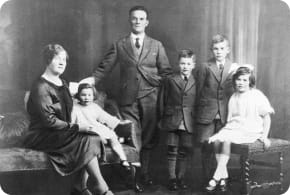
04/16/2018Nelphi Oliver Wahlstrom, son of Nils Olof and Caroline Kull Wahlstrom, was born March 9, 1880, at Laketown, Utah.
He was married to Annis Weston on June 28, 1905, in the Logan Temple. They traveled to Logan by way of the old Meadowville Canyon Road.
Nelphi lived his entire life in Laketown and served his community in many varied and useful ways with his exceptional talents. Besides being an excellent blacksmith and working in several different occupations, he helped entertain the young and old as a musician. He could play a tune by ear on the accordion, the mouth organ, and the piano and he possessed one of the finest bass voices in the valley. He was a faithful choir member, and he also, along with Ernest Irwin, Albert R. Weston and Heber Robinson, formed the Laketown Quartet that was popular for 25 years in the area. They usually sang at all the graveside services in the community.
Nelphi’s son Norman indicated that his father’s work ethic was: “what is worth doing is worth doing well.” Nelphi’s children, Ruby and Elmer, remembered turning the fan on the fire pit in the blacksmith shop and watching the sweat roll off Nelphi’s forehead as he worked.
He was a good provider and a hard worker and taught his children likewise.
Not only was Nelphi a blacksmith, but he was also a butcher. He charged $1.00 for a beef and $.50 for a hog. He also practiced farming, barbering and, occasionally, dentistry. His son Stanley related two instances of dentistry to a grandson as follows: Stanley needed a wisdom tooth pulled so, as Nelphi was getting a good hold on the tooth, Stanley made him promise not to let go until the tooth came out. Another time, Nelphi took Stanley over to Willis Johnson’s home where Nelphi held Stanley’s head while Willis extracted a tooth. Stanley, in his usual wit, calls these the good old days!!
A story was also told about a Bask sheep herder who wanted a haircut. He had been in the hills with a sheep herd for a long time and was truly in need of this haircut. He inquired in town concerning a barber and was directed to Nelphi. When he arrived at Nelphi’s, Nelphi had just butchered an animal and his apron was somewhat blood-stained. He told the sheep herder that he would be next if he would let Nelphi change his apron. I guess the sheep herder thought about the bloody apron and decided he could get a haircut somewhere else with significantly less risk for, when Nelphi returned with the fresh apron, the sheep herder was nowhere to be seen.
To provide for his family, Nelphi had a few cows and a very large garden. In his yard they had crabapple, apple and pear trees, a plum forest, raspberry patch, currant and gooseberry bushes, asparagus and a vegetable garden. Wild, native currant bushes were cultivated around the home. An outside cellar was used too as a place to store the vegetables in the fall. Extra produce was hauled by wagon to Kemmerer, Wyoming, a four-day trip. Their home provided ample opportunity for their children to learn to work. Nelphi’s son, Owen, remarked, “It was not a matter of finding something to do in those days, it was trying to figure out how not to do something.”
Nelphi also had a pigpen, chicken coup, horse barn, and a cow barn. He maintained a dairy herd, a flock of chickens, and a few pigs. He raised his own meat. They always had choice beef, lamb, and pork. There was also a granary, a cow shed, a calf pen, a machine shed and workshop, and ice bin. The ice was harvested from Bear Lake in the winter and was stored to keep food cold in the summer. The ice also provided the opportunity to make ice cream through the use of an 8 quart, hand-turned freezer. The ice cream was wonderful. The garage sheltered the Graham Paige, the family car that Nelphi treasured so much.
In the summer the hay and straw stacks were added. Nelphi’s children enjoyed playing the game “I’m the Boss of Bunker Hill” when Nelphi approved. The barnyard provided a place to play games like Run Sheep Run, Dare Base, Hide and Seek, First Base and Fly Ball. Nelphi’s daughter Edna remembers the good times they used to have after supper in the evenings when the children would go out and play in the barn and corrals with the Irwin’s and Byrd Kearl’s kids. She states that all the children had jobs to do and there was no fooling around until all the chores were completed. The boys played marble games in the early spring on the south side of any building where the ground dried first from the winter snow. Ruby said that in the winter they would sleigh ride on the hill behind the shop and when they would get cold they would go into the shop to get warm. Nelphi’s son Owen can remember turning the crank on the hand-run drill press until he thought his arms would fall off!
Nelphi had also enjoyed playing ball in his younger years. However, he lost interest in baseball after a game on the 24th of July in 1897, when he was accidentally stuck with the club used. It inflicted a wound over his left eye. The newspaper indicates it left a bad scar.1
Nelphi’s support for education is demonstrated by almost all of his daughters ending up as valedictorian of their respective classes when they graduated from high school. The girls in the family were given two dresses a year, so they had to be quite careful with their clothing.
Nelphi loved to hunt and fish as did his sons.
Nelphi made sure his children were all in church every Sunday. He served as Secretary to the Elder’s Quorum and as a Ward Teacher for several years. Nelphi never lost sight of the teachings of the Church and always admired and spoke highly of the General Authorities. He liked to attend General Conference in Salt Lake City and would take a horse and buggy to Cache Junction and catch the train to the meetings.
On one occasion as Nelphi was going to Fossil to help shear sheep, he was prompted by the Spirit to return home. Upon arriving home in Laketown, he found his baby girl, Ruby, very ill. He and his brother Nephi administered to Ruby and her health returned.
Nelphi’s wife Annis, as you can guess, had to be a very good manager and was a very busy mother. She was noted for her very white washing and clean, tidy home. About the only time Annis could escape the duties of the house was when Nelphi would take her and some of the family in a wagon to Brigham City by way of Cottonwood and Blacksmith Fork Canyons to get the winter’s supply of fruit (a four day trip with horse and wagon).
The family endured many trying times. Nelphi lived through the Great Depression of the 1930’s, and both World Wars. Several of his sons served in the military in World War II. The family has been blessed because all but one child was living as of May 1988.
The Depression and World Wars were not the only major things happening during Nelphi’s lifetime, for it was also an age of vast invention. Some of the things developed during his lifetime were: Penicillin, television, the atomic bomb, radar, jet engines, diesel locomotives, refrigeration for the home, electric welding, the automotive industry, commercial airliners and central heating and air conditioning.
In his life, Nelphi’s home and family were his most precious possessions. He was a faithful husband and father, and the family relished being together. After most of his children were married, Thanksgiving and Christmas were family gathering times. During the summers, family members that lived further away would return home with their children. The adults gathered inside the home while the children would play outside.
In the home, grandchildren generally spoke only when spoken to. Nelphi’s chair in the living room and at the kitchen table were reserved for him. They prized the wind up record player and, later, the radio that was given to Nelphi by his son Owen. Nelphi would sit by the radio in his large rocking chair and listen to the news and other programs. The house also contained a parlor that was re¬served for special events and occasions. His son Norman recounts, “In our home we had a parlor, a lovely room with the best furnishings. Our parlor was used on Sundays and for special occasions. This had an input in the lives of us children. It taught us appreciation and respect. Some of the activities in the parlor were—the phonograph, radio, piano, accordion, singing, listening to Amos and Andy, Lucky Strike Hit Parade, news, sports, etc. Every Sunday morning you would find us in church dressed in our Sunday best.” The parlor was generally off limits for grandchildren.
Indeed, their home was a home of order. It had three bedrooms inside, one for the parents, one for the girls, and another for the boys. The boys also used the washroom located next to the house for a bedroom. A wood stove in the living room and the wood cook stove in the kitchen kept the home warm in the winter. The cooking stove also was a source of heat to heat water. A large tank in an adjoining room was connected to heating coils in the stove and gravity caused the water to circulate as the water was heated. The heated water was stored in a hot water tank in the adjoining bathroom. In the early years, the bathroom was outside.
Part of their recreational activities included playing cards. This helped pass the time and provided social interactions with family members and friends. Rook was played by the Laketown rules. The games would draw Arch and Julia McKinnon from Logan for many a night’s entertainment. They even modified a car so their son Mikal could be put to sleep during the evening and then be carried to his bed in Logan after they returned.2,3
On Tuesday, June 28, 1955, Mr. and Mrs. Oliver Wahlstrom celebrated their Golden Wedding Anniversary. The following narrative was taken from the Sunday, July 8, 1955, edition of the Unita County Herald, Evanston, Wyoming:
All of their eleven children are living and all were in Laketown to do honor to their parents on this important milestone in their lives. At a sumptuous dinner prepared by the daughters and held in the dining room of North Rich high school at one o’clock were present, besides the honored guests, Mr. and Mrs. Stanley Wahlstrom, Wilson and Lee. Their eldest son Allan, in the service, is in Germany. Mr. and Mrs. Harold Johnson (Lola) and their children, Ruby Jean, Colleen, Norman and Donald; Mr. and Mrs. Henry Earley (Edna) and daughter LaRue. Glen is in the service in Alaska. Oliver who lives in Lewiston was unable to come. Mr. and Mrs. Delmas Kearl, (Ruby) and their daughters Julie, Lula, Audrey and Diane, Mrs. G. Arch McKinnon and sons Mikal and Kim (Todd was ill and re-mained at home with his father); Mr. and Mrs. Louis Wahlstrom and son John of Montpelier, Idaho; Mr. and Mrs. Osborne Kerr (Noriene), Norman 0., Marjorie and Wendell of Van Nuys, Cal.; Col. and Mrs. Norman Wahlstrom, Norman, Carolyn Ann and Michael of Fort Worth, Texas; Mr. and Mrs. Owen Wahlstrom, Owen, Curtis, and Susan, Mrs. Clarence Peterson (Agnes) with her youngest child, Boyd, (Carolyn and Karma remained in Wisconsin with their father, who supervises the Chicago Stake Welfare Farm situated at Salem, Wisconsin) and Elmer Wahlstrom.
Adorning the dining table was a beautiful wedding cake presented by the children.
Immediately following the dinner, family group pictures were taken.
Following the pictures, a program was given by the grandchildren as follows: Recitation, Lee Wahlstrom, Song: “My Best To You” Ruby Jean Johnson, Julie and Lula Kearl, Saxophone solo, Julia Kearl, recitations, Mikal and Kim McKinnon. Lula and Audrey Kearl, in costume took the part of the grandfather and grandmother in a song: “When You Wore a Tulip”. Young John Wahlstrom gave a poem. Norman 0. Kerr played three numbers on his accordion. Edna Earley and Osborne Kerr presented a skit. Carolyn Ann Wahlstrom sang “Davy Crocket”, Owen and Curtis Wahlstrom recited an original poem, composed for the occa¬sion. The father, Oliver Wahlstrom, sang a song, composed by himself, to his wife Annis. Elmer sang a baritone solo: “It’s the Loveliest Night of the Year”. At the close of this memorable day the children all gathered at the old home for a good visit and refreshments.
Nelphi Oliver and Annis were both born in Laketown, he in 1880, she in 1884. Their lives have been lived in Laketown. They were married in the Logan temple, June 28, 1905. Nelphi Oliver was the son of Nils O. and Caroline Kull Wahlstrom, Annis the daughter of Joseph and Annis Robinson Weston. Oliver was the town butcher for many years. He was also the town blacksmith, following the trade established years before by his father, until the automobile and tractor supplanted the horse.
He played the accordion, and he and Heber Irwin furnished music for the dances in Laketown for many years. They also rode horseback to Round Valley to play for dances. Mr. Wahlstrom was a member of the choir for over 50 years and was “basso profundo” in the old Laketown male quartet singing with Heber C. Robinson, Albert R. Weston, Ernest W. Irwin, for many years.
Mr. and Mrs. Wahlstrom take great comfort in the fact that their children are all living, and are all in the enjoyment of good health and are all useful citizens. The people of Laketown offer their congratulations to this fine couple on the achievement of their Golden Wedding and wish then continued health and happiness together.4
Nelphi was in ill health for several years prior to peacefully passing away at his home on Sunday morning, November the 6th, 1955, at the age of 75.
Endnotes
1. “Laketown Locals” The Roundup. Newspaper article, Randolph, Utah. Page 4. August 6, 1897. Web edition. ******************************************************************************************* (: accessed September 18, 2009).
2. Kearl Family [Julia Annis, Lula, Audrey, and Diane Ruth]. Born of Goodly Parents; A History of Delmas and Ruby Kearl. Privately published by The Delmas and Ruby Kearl Family, 1996.
3. Wahlstrom, Owen Rich. “The Wahlstrom Heritage,” unpublished manuscript in the possession of Mikal McKinnon, May 30, 1988.
4. Untitled newspaper clipping. Unita County Herald, Evanston, Wyoming, Sunday, July 8, 1955.
5. “Nelphi Oliver Wahlstrom” Obituary and funeral service. Undated clipping ca November 1955, from unidenti¬fied newspaper contained in a scrapbook kept by his daughter Julia Wahlstrom McKinnon Neal.
The text was from a book written by Mikal A. McKinnon titled “Archibald Graham McKinnon, Julia Wahlstrom and their ancestors,” 2011, Available at the Family History Library, call number 929.273 M216. Note: The book version contains hyperlinks, tables, additional pictures, and an every name index that are not included is this text only version.