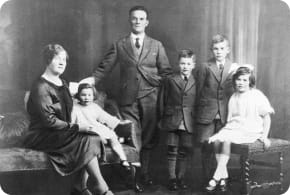
Leland Van Wagoner

1899 - 1969

Research Leland Van Wagoner (7 Apr 1899 - 12 Aug 1969), who lived during the Victorian era through this comprehensive BillionGraves GPS Headstones record from Provo, Utah, United States. Find their grave at Provo City Cemetery with GPS location. Explore headstone photos, biographical details, and related family records.

Final resting place of Leland Van Wagoner, 7 Apr 1899 - 12 Aug 1969. Headstone located at Provo City Cemetery, Provo, Utah, Utah, United States

Record Info

Given Name: Leland
Last Name: Van Wagoner

Finding more about Leland

Every image taken by the BillionGraves app includes high precision GPS coordinates. Tap below to see the GPS location of this grave.

Other Info

View on FamilySearch

Epitaph

FATHER MOTHER

Description

Father Leland

Mother E. Leona M.

Contributors

Memories

Interview with Leland Van Wagoner

04/18/2018
INTERVIEW WITH LELAND VAN WAGONER Technician on the Tabernacle Organ from 1945 to 1955 By Carole J Fowler, sister-in-law -- April 1967 Leland’s interest in organs began in 1921 in the city of Provo, Utah. He had always been interested in things mechanical and any kind of music. The fact that his good wife was an outstanding organist in the area was the drawing card to the mechanics of an organ. If she played an organ which wasn’t quite in tune, or was not functioning properly, she would call for her husband’s assistance. It was at this time when the huge Wurlitzer organs became popular to use in the movie theaters as background music for the films. These organs were very expensive to build, but the theater owners felt even with the high initial cost they would still save money over the long run as it cost several hundred dollars each week for an orchestra. The average salary paid a theater organist during the twenties was forty-five dollars a week. Leland operated a Photo Studio next door to the theater in Provo. When he heard of the installation of the big pipe organ, he quickly paid a visit to the owner. He volunteered his services free hoping to get a chance to help build the organ. The owner said, “But Van, I can’t let you do it for nothing.” Leland insisted he wanted to get the experience and would be only too happy to spend as many hours as possible without pay. When the job was finished he was told there would never be an admission charge for him or any of the family. Oh how thrilled the children were to be able to go to the theater and just say, “We’re Van’s kids” and in they’d go. They were surely proud of their Papa. The actual profession of Leland was photography. In nineteen thirty-five he was offered a good position with the Salt Lake Tribune News Paper. This called for a move to Salt Lake City which the young family undertook. He spent ten enjoyable years with the Tribune, still keeping up an interest in organs. A message from the Presiding Bishop’s Office was on his desk one day. He called upon the Brethren, whereupon, they offered him the job of caring for the Tabernacle Organ. This involved about three or four hours a day and worked in fine with his schedule as he didn’t report for work at the Tribune until afternoon. After a year and a half a work program was planned which would involve full time, so he left the newspaper business and devoted full time to his “hobby”. The new work schedule included service for the Ward organs throughout the Church and really kept Leland busy. Approximately two years later the “rebuilding” of the Tabernacle Organ was started. This involved many hours working closely with the factory men to get the perfection desired for such a world famous instrument. He was sent to the factory by the Church in order to get some specialized training. The Organ was completed in nineteen forty-eight at a cost of $125,000. The console consists of five manuals and eight organs within one large organ. The names of the eight organs are, swell, great, choir, solo, bombard (which is the trumpet section and most powerful), the positive, pedal, and anti-final (which is the echo organ). During the interview I felt a sincere interest displayed by Leland about his job with the Church. He said it was a tremendous feeling to care for such a well known instrument. To be connected with the Tabernacle Organ was a magic word to any organ manufacturing company in the world. Most of the old organ was shipped to the BYU campus and installed by Leland in the Joseph F. Smith Building. He also installed the organs in the Bonneville Stake Center, the Idaho Falls Temple, U of U Institute of Religion, and in Provo at the Christian Science Church and the Burg Mortuary. The original Tabernacle Organ was completed in eighteen sixty-seven. It then contained seven hundred pipes. It has since been rebuilt several times. Only twelve of the original pipes remain in use in the back. Only eight of the front pipes play. Leland was released from Church service due to ill health in nineteen fifty-five. After his recovery he returned to the photography business operating under the name of Lee Van Photo in Salt Lake City. He still keeps an active interest in what goes on at the Tabernacle and does a good deal of photo work for the Church. Before entering into the photo business again he was asked to come to Illinois and assist in installing two organs for the Lutheran Church in Decatur and Bloomington. He explained an interesting point to me. All small organs built to size specified by the position it will occupy. They are then put together, played, and tuned at the factory. All parts are numbered and then taken apart and shipped to the Church. They are then unpacked and placed in position on a numbered “foot board”. “How does our Tabernacle Organ compare with other large pipe organs in the world?”, I asked. He told me the largest organ in the world is in Convention Hall at Atlantic City, Florida. It has 44,000 pipes and considered to be the finest in tone quality. The Tabernacle Organ has 10,746 pipes at last count and is among the tops in tone quality. All organists throughout the world are able to know what each of the fine organs are capable of doing with the publication of a “stop list” in the well known organ publications. I feel that I gained much in the short time I spent with Leland. He is a thoroughly interesting person.

Interview with Leland Van Wagoner

10/05/2019
INTERVIEW WITH LELAND VAN WAGONER Technician on the Tabernacle Organ from 1945 to 1955 By Carole J Fowler, sister-in-law -- April 1967 Leland’s interest in organs began in 1921 in the city of Provo, Utah. He had always been interested in things mechanical and any kind of music. The fact that his good wife was an outstanding organist in the area was the drawing card to the mechanics of an organ. If she played an organ which wasn’t quite in tune, or was not functioning properly, she would call for her husband’s assistance. It was at this time when the huge Wurlitzer organs became popular to use in the movie theaters as background music for the films. These organs were very expensive to build, but the theater owners felt even with the high initial cost they would still save money over the long run as it cost several hundred dollars each week for an orchestra. The average salary paid a theater organist during the twenties was forty-five dollars a week. Leland operated a Photo Studio next door to the theater in Provo. When he heard of the installation of the big pipe organ, he quickly paid a visit to the owner. He volunteered his services free hoping to get a chance to help build the organ. The owner said, “But Van, I can’t let you do it for nothing.” Leland insisted he wanted to get the experience and would be only too happy to spend as many hours as possible without pay. When the job was finished he was told there would never be an admission charge for him or any of the family. Oh how thrilled the children were to be able to go to the theater and just say, “We’re Van’s kids” and in they’d go. They were surely proud of their Papa. The actual profession of Leland was photography. In nineteen thirty-five he was offered a good position with the Salt Lake Tribune News Paper. This called for a move to Salt Lake City which the young family undertook. He spent ten enjoyable years with the Tribune, still keeping up an interest in organs. A message from the Presiding Bishop’s Office was on his desk one day. He called upon the Brethren, whereupon, they offered him the job of caring for the Tabernacle Organ. This involved about three or four hours a day and worked in fine with his schedule as he didn’t report for work at the Tribune until afternoon. After a year and a half a work program was planned which would involve full time, so he left the newspaper business and devoted full time to his “hobby”. The new work schedule included service for the Ward organs throughout the Church and really kept Leland busy. Approximately two years later the “rebuilding” of the Tabernacle Organ was started. This involved many hours working closely with the factory men to get the perfection desired for such a world famous instrument. He was sent to the factory by the Church in order to get some specialized training. The Organ was completed in nineteen forty-eight at a cost of $125,000. The console consists of five manuals and eight organs within one large organ. The names of the eight organs are, swell, great, choir, solo, bombard (which is the trumpet section and most powerful), the positive, pedal, and anti-final (which is the echo organ). During the interview I felt a sincere interest displayed by Leland about his job with the Church. He said it was a tremendous feeling to care for such a well known instrument. To be connected with the Tabernacle Organ was a magic word to any organ manufacturing company in the world. Most of the old organ was shipped to the BYU campus and installed by Leland in the Joseph F. Smith Building. He also installed the organs in the Bonneville Stake Center, the Idaho Falls Temple, U of U Institute of Religion, and in Provo at the Christian Science Church and the Burg Mortuary. The original Tabernacle Organ was completed in eighteen sixty-seven. It then contained seven hundred pipes. It has since been rebuilt several times. Only twelve of the original pipes remain in use in the back. Only eight of the front pipes play. Leland was released from Church service due to ill health in nineteen fifty-five. After his recovery he returned to the photography business operating under the name of Lee Van Photo in Salt Lake City. He still keeps an active interest in what goes on at the Tabernacle and does a good deal of photo work for the Church. Before entering into the photo business again he was asked to come to Illinois and assist in installing two organs for the Lutheran Church in Decatur and Bloomington. He explained an interesting point to me. All small organs built to size specified by the position it will occupy. They are then put together, played, and tuned at the factory. All parts are numbered and then taken apart and shipped to the Church. They are then unpacked and placed in position on a numbered “foot board”. “How does our Tabernacle Organ compare with other large pipe organs in the world?”, I asked. He told me the largest organ in the world is in Convention Hall at Atlantic City, Florida. It has 44,000 pipes and considered to be the finest in tone quality. The Tabernacle Organ has 10,746 pipes at last count and is among the tops in tone quality. All organists throughout the world are able to know what each of the fine organs are capable of doing with the publication of a “stop list” in the well known organ publications. I feel that I gained much in the short time I spent with Leland. He is a thoroughly interesting person.

BillionGraves GPS Headstones

What is the BillionGraves App Headstone Collection?

The BillionGraves App Headstone Collection contains photos of gravestones taken by volunteers with the BillionGraves app in cemeteries around the world. The names, dates, and other information have been transcribed and are searchable.

Each gravestone photo has been tagged with GPS coordinates and the locations are plotted on a cemetery map.

What genealogical data can I learn from the BillionGraves App Headstone Collection?

The BillionGraves App Headstone Collection records may include:

  • First name
  • Last name
  • Age at Death
  • Spouse
  • Gender
  • Occupation
  • Names and relationships of family members
  • Clubs, hobbies, organizations, and interests
  • Religion
  • Burial Location and Cemetery
  • Military Information
  • Birthplace or Country of Origin

The BillionGraves App Headstone Collection also shows nearby gravestones. Since 70% of people are buried in family plots, this can reveal even more family relatives.

What years does it cover?

The BillionGraves App Headstone Collection spans from about 1600 to the current day.

Source Citation

BillionGraves GPS Headstones Leland Van Wagoner (7 Apr 1899 - 12 Aug 1969) https://billiongraves.com/grave/Leland-Van-Wagoner/12362 BillionGraves.com

Adjacent Records

8 Records

These records were created in the same area as this record.

Cemetery Intelligence

Cemetery Intelligence

Use AI-powered Cemetery Intelligence to help research your family history. Get instant insights, discover connections, and uncover stories about Leland.

Analyze Headstone

Extract and analyze information from the headstone images of Leland. Get details about dates, inscriptions, and other important information to enhance your family history research.

Find Nearby Family

Discover relatives of Leland buried in the same cemetery. AI helps identify potential family connections based on surnames, dates, and proximity.

Get the Life Story

Generate a comprehensive life story for Leland using AI. We'll analyze available records, dates, and locations to create a narrative about their life.

Find Other Research Sources

Get AI-powered suggestions for additional research sources for Leland, including census records, military records, and historical documents.